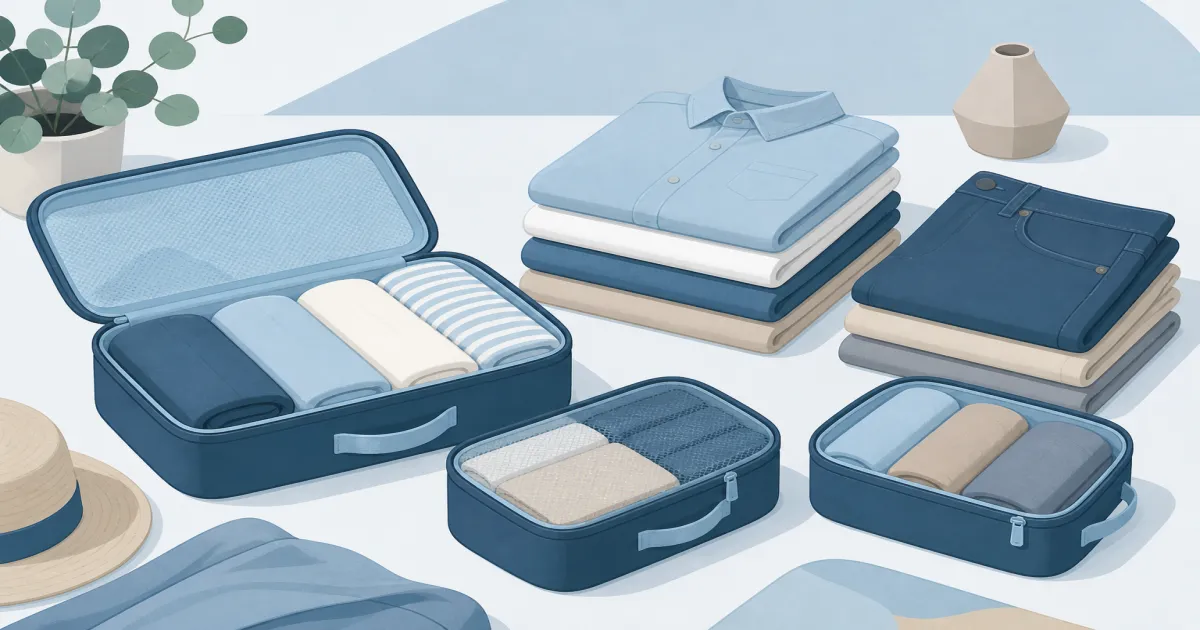
How to Fold Clothes for Packing: Flat Folds That Resist Wrinkles
Packing cubes
How to fold clothes for packing is about clean edges and fabric type. Fold structured shirts and trousers; save tight rolls for soft knits that forgive creases.
Our picks
Rolling gets the viral demos. Folding still wins for anything with structure. If you only roll, dress shirts arrive with spiral lines and trousers lose their crease. This guide covers flat folds that stack well in suitcases and packing cubes, plus when to switch methods. Fold structured pieces. Roll tees and knits.
Pair this with how to roll clothes for packing so you can mix methods in one bag. For cube zones, read how to use packing cubes. For trousers specifically, see how to pack pants in a suitcase.
If this is your first stop in the category, our packing cubes category collects the rest of the series, with our best travel packing cubes guide covering the leading options.
What folding is good at
Folding creates flat layers with predictable edges. That helps when you want a shirt to sit smooth under a suitcase lid or inside a cube. It also preserves a trouser crease if you fold along that line instead of inventing a new one.
Folding is weaker at filling odd gaps. Soft rolls are better as "mortar" around a structured stack. A smart bag uses both.
Prep before the first fold
Start with dry clothes. Damp fabric sets wrinkles harder. Smooth each item on a flat surface. Empty pockets. Button or zip so fronts stay aligned.
If you care about a shirt for a meeting, give it a quick iron or steamer at home first. Packing does not fix a wrinkled shirt. It only tries not to make it worse.
Dress shirts and button-downs
Button the shirt. Lay it face down. Fold each sleeve back along the shoulder seam so the cuff sits near the hem without twisting. Fold one side toward the center, then the other, making a long rectangle. Fold the rectangle in half or thirds to match your bag or cube width.
Keep the collar neat. A crushed collar is harder to fix than a soft crease in the body. Some travelers slide the collar around a soft roll of socks for support. That works if the socks stay clean and dry.
Do not fold shirts on a diagonal "gift wrap" style unless you like random crease maps. Straight folds along seams are easier to hang out later.
T-shirts and casual tops
You can fold tees the retail way: sleeves in, fold in half, then in half again. You can also roll them. Folding tees is fine when you want neat stacks in a cube. Rolling tees is better when you need density and gap fill.
Avoid folding a graphic tee so the print sits against a rough zipper for a week. Face soft prints toward softer fabric.
Trousers and jeans
Dress pants: align the crease, fold over the seat once, then fold to length. Keep the crease continuous. Jeans: fold in half down the leg, then in half or thirds. Chinos sit between those two approaches; follow a crease if there is one.
Never cram belts into the trouser fold. Coil belts separately. For more pant-specific layouts, use the pants guide linked above.
Skirts, dresses, and softer long pieces
Fold along seams and support the waistband. Long dresses often do better with a gentle fold and a spot near the top of the bag, or a tissue interleave. For dress-focused packing, see how to pack a dress in a suitcase.
Knits can fold loosely. Tight folds on heavy knits leave deep marks. When in doubt, fold once and pad with tissue rather than forcing a small rectangle.
Stacking order in the suitcase or cube
Put structured folded items in a flat layer. Place softer items around or above them. Keep heavy shoes away from shirt stacks. If you use cubes, dedicate one cube to folded shirts and another to rolled soft items so methods do not fight.
Do not sit on the suitcase to crush a perfect fold stack. Compression that strong prints wrinkles into cotton and linen. Leave a little loft.
A dry-cleaner bag between shirt layers reduces friction. It is a small trick with a real payoff on light colors.
Fabric cheat sheet
- Cotton dress shirts: fold, hang on arrival, steam if needed
- Linen: fold gently, expect some texture, hang in steam
- Wool trousers: fold on crease, avoid sharp new lines
- Jersey tees: fold or roll
- Performance knits: roll or loose fold
- Silk: fold with tissue, keep away from zippers and hooks
Common folding mistakes
Folding everything the same width regardless of fabric. Overfolding into tiny bricks. Mixing damp gym clothes into the clean shirt cube. Placing a folded stack under a toiletry bottle. Waiting until the next morning to hang clothes that needed air the night before.
Another mistake is treating folding and packing cubes as optional opposites. Cubes hold folds in place. Folds give cubes clean contents. They work together.
Hotel reset
Unpack structured pieces first. Hang shirts and trousers. Smooth collars with your hands. Use the bathroom steam trick for light wrinkles: hot shower, door closed, clothes out of the spray. A travel steamer helps on long work trips; many people do not need one for casual weeks.
Refold only what stays in the bag for the next city. Dirty items go to laundry, not back into the clean fold stack.
Optional: cubes that hold a fold
You can fold into an empty suitcase and do fine. If clothes migrate, park folded stacks in the Veken 8 Set Packing Cubes so the lid press does not remix everything. Cubes are optional glue for good folds, not a substitute for them.
Quick checklist
- Dry, smooth, button or zip.
- Fold shirts along seams; protect collars.
- Fold pants on the crease when they have one.
- Stack flat; do not crush the lid down hard.
- Hang structured pieces on arrival.
How to fold clothes for packing is not nostalgia for department-store tables. It is the right tool for clothes that show creases. Use it on purpose, roll the rest, and your bag stays calmer from gate to hotel closet.
Frequently Asked Questions
Is folding better than rolling for packing?
Folding is better for structured shirts, trousers, and anything with a crease you want to keep. Rolling is better for soft tees, underwear, and knits. Use both in one bag.
How do I fold a dress shirt for a suitcase?
Button it, smooth the sleeves back, fold lengthwise once, then fold to bag width. Keep the collar supported and avoid diagonal crumples across the placket.
Do folded clothes take more space?
Sometimes yes, because folds trap a little more air than tight rolls on soft fabric. The tradeoff is fewer spiral wrinkles on structured pieces.
Should I fold clothes inside packing cubes?
Yes. Place folded stacks flat in a cube, heaviest or most structured on the bottom. File soft rolls vertically in a different cube if you use both methods.
How do I reduce fold wrinkles?
Fold along existing seams, do not over-compress, unpack and hang on arrival, and slide tissue or a dry-cleaner bag between shirt layers when you care about the look.
Can I fold jeans the same way as dress pants?
Jeans can fold in half twice and survive. Dress pants should follow the crease. Denim dye can transfer, so keep dark jeans away from light shirts.