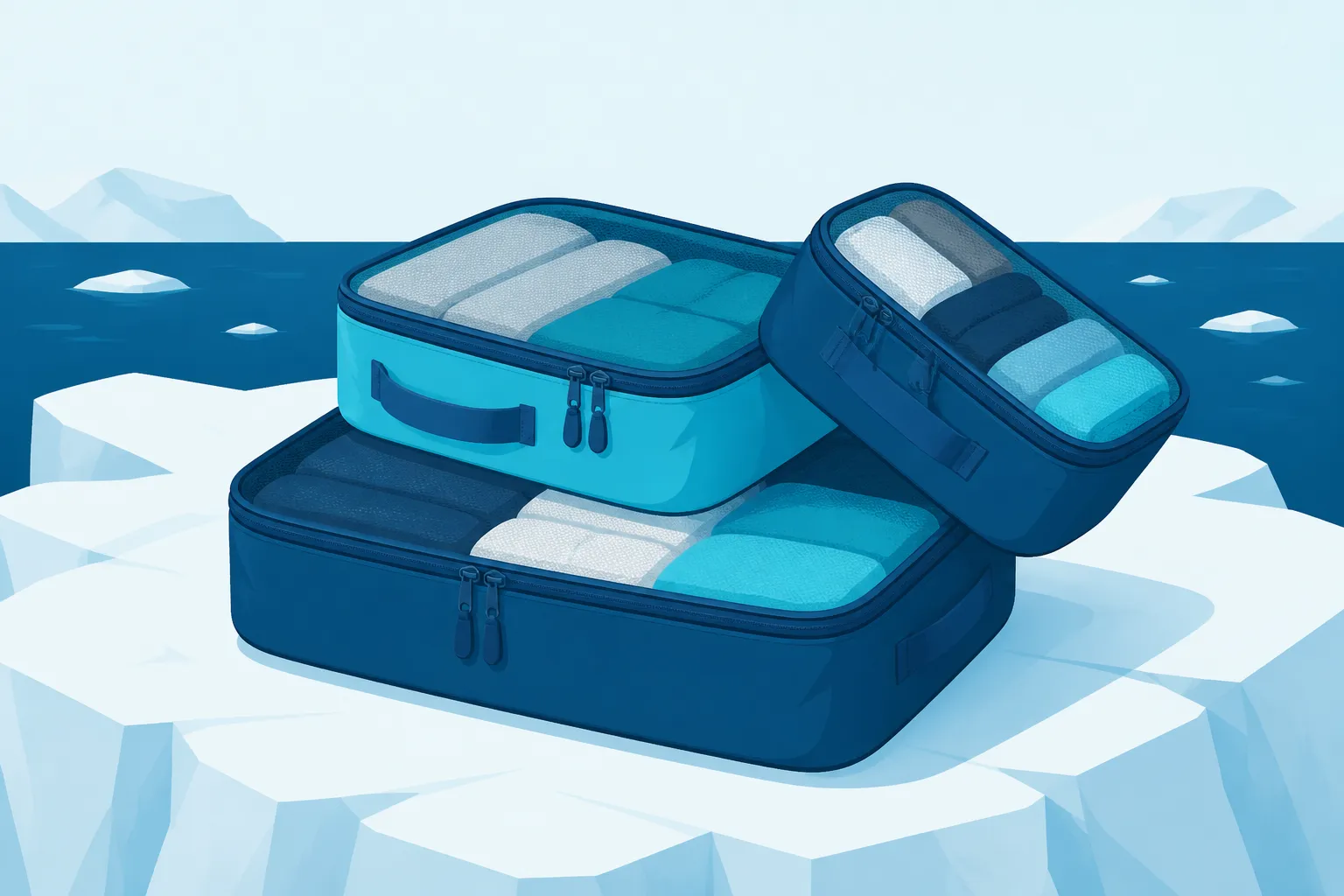
How to Use Packing Cubes: Zones, Fold vs Roll, and Hotel Reset
Packing cubes
Learn how to use packing cubes for carry-on and checked bags with simple zones, fold-and-roll rules, and a hotel reset that keeps the suitcase organized.
Our picks
Packing cubes look simple until you zip them shut and realize you built four identical bricks with no logic. The fix is not buying more pouches. It is learning how to use packing cubes as zones inside a bag, not as a magic compression trick.
If you fly carry-on only, pair this guide with best packing cubes for carry on. For jackets and sweaters that eat half your suitcase, read best compression packing cubes. Brand maps for the two Amazon value sets live in Veken packing cubes and BAGSMART packing cubes. This page answers the practical version of the query: how to use packing cubes step by step, what goes where, and how to reset the bag once the trip starts.
For a broader view of the subject, our full packing cubes section collects the rest of the series. The best packing cubes guide ranks the main sets, and the best travel packing cubes guide gives you the slim carry-on shortlist.
Choose your cube zones before you pack
Start with categories, not cube sizes. A typical week-long setup uses four zones: tops, bottoms, underwear and socks, and outerwear or activewear. Add a fifth only if you truly need separation, like work clothes vs casual layers.
Label cubes by color or a small tag if you share a bag. "Blue is shirts" beats opening four identical pouches at 6 a.m. Keep liquids, shoes, and tech out of clothing cubes entirely. Those items need their own homes for TSA rules and leak control.
Match cube dimensions to your bag interior. Measure width and depth, then buy cubes that nest side by side instead of one oversized brick. A cube that is one inch too tall in every stack becomes a chronic zipper fight against the suitcase lid.
Pack in layers, not piles
Think bottom to top inside the suitcase, not "whatever fits." Bottom layer: shoes in a bag, compressed jackets, or anything heavy and flat. Middle: bottoms cube and one structured cube for items you want to stay neat. Top: tops cube and underwear cube for fast hotel access.
Leave a flex gap near the hinge or water-bottle pocket. A perfectly tessellated cube mosaic looks neat at home and fails when you buy a souvenir book on day three. Packing is logistics under constraint, not Tetris for its own sake.
Inside each cube, pack firm items on the bottom and soft rolls on top. Do not overstuff until the zipper bows. A cube should close cleanly with a finger of slack. Overpacked cubes crease shirts and stress zippers at the corners.
Fold, roll, and compress on purpose
Rolling works for tees, underwear, and soft knits. Folding works for button-downs, chinos, and anything you want to grab without ironing. If you own compression cubes, use them only on bulky soft layers like hoodies and fleeces, not on dress shirts.
The compression sequence matters: pack expanded, zip the contents closed, then pull the compression zipper in stages. Stop when the cube is firm, not rock-hard. Over-compression creates permanent creases and stressed zippers that fail mid-trip.
One compression cube plus two regular cubes beats an all-compression set for most travelers. Compression bricks get rigid. Mixing cube types keeps your bag flexible enough for overhead bins and under-seat personal items.
Hotel reset: live out of the cubes
The biggest mistake is unpacking cubes into dresser drawers, then forgetting what lived where. Instead, open the suitcase and treat cubes as drawers. Pull the tops cube to the nightstand, leave bottoms in the bag, and zip shut what you are not using.
Nightly reset takes two minutes: worn items go to the laundry cube or bag, tomorrow's outfit moves to the top of the relevant cube, and zippers close before you sleep. That habit is what makes packing cubes feel effortless on day five instead of chaotic.
If the room has no dresser, cubes are the dresser. If you share a closet, color-coded cubes prevent the "whose shirt is this" argument. Keep dirty items in a separate travel laundry bag or a reversed spare cube. The system works because the bag layout never fully explodes.
Security day and repack discipline
Stage liquids and laptops where you can remove them without dismantling every cube. If reaching toothpaste requires unpacking three pouches, redesign before your next flight. The outfit cube you might need after landing should sit near the top on travel mornings.
When you shop mid-trip, use the flex gap you left on day one. Compress one cube slightly, or move souvenirs into your personal item. Cubes organize what you already chose to bring. They do not fix overpacking at the airport gift shop.
At checkout, reverse the reset: dirty clothes consolidated, cubes zipped, flex gap preserved for the ride home. A five-minute repack beats a twenty-minute rebuild from scattered piles.
Common mistakes to skip
Buying extra-large cubes meant for checked luggage when you fly carry-on only. Filling every cubic inch so the bag cannot flex around a laptop sleeve. Packing liquids inside clothing cubes to save space. Assuming more cubes equal better organization. Skipping a dirty-clothes plan until day four.
Another quiet failure: using cubes as junk drawers. If a cube holds "miscellaneous," it will become a black hole. Either assign a real category or leave that item out. The whole point of learning how to use packing cubes is making every zone predictable enough that you can find things half-awake in a hotel room.
When cubes are not the answer
Skip cubes if you pack ultralight with three outfits and live out of a daypack. Skip them if you mostly carry hard goods, camera bodies, or tools that need padded cases. Cubes shine for soft clothes in suitcases and structured backpacks, not for every item in your life.
Keep cubes if you reopen your bag daily, share packing duty with a partner, or hate the floor-dump reset in hotel rooms. They are a sorting tool, not a weight reduction tool.
A cube set that matches this system
Build the zones in this guide with the Veken 8 Set Packing Cubes. Mesh lids make it obvious which cube is shirts versus underwear at 6 a.m.
If hoodies keep forcing the lid open, add compression via BAGSMART 6-Set Compression Packing Cubes for soft bulk only. Leave dress shirts in a regular cube. Over-compression is how people decide cubes "ruin clothes."
A see-through set for the zones
Best for: Travelers who assign a cube per zone and want to identify each one without opening it.
The Dot&Dot Large Packing Cubes fit the zone system in this guide because each of the five cubes is a different color and the fabric is translucent. Label the tops cube, the bottoms cube, and the outerwear cube, and you can pull the right one without unzipping the rest. Every cube is the same large size, so the layout repeats the same way each trip, which is the habit that makes cubes stick.
The single size is the trade. There is no small cube for socks or underwear, so those need a separate pouch, and there is no compression zipper for bulky layers. Use this set when your zones are larger categories and you would rather see the contents than squash them.
Skip if: You need small cubes for underwear or compression for jackets.
Buy if: You want color-labeled, see-through zones all in one size.
Final takeaway
Learning how to use packing cubes comes down to zones, layer order, and nightly reset. Assign categories, pack heavy and flat on the bottom, mix compression where it helps, and live out of the cubes instead of transferring everything to hotel furniture. Match cube sizes to your bag, leave flex space, and edit clothes before you buy more organizers. That repeatable system matters more than any brand label.
Frequently Asked Questions
Do packing cubes actually save space?
They save time and mental energy more than raw volume. Compression cubes can shrink bulky layers, but cubes mainly stop clothes from becoming one tangled pile.
Should I roll or fold clothes in packing cubes?
Roll soft tees and underwear. Fold structured shirts and trousers. Mix both inside one cube if you pack firm items on the bottom and soft rolls on top.
How many packing cubes do I need for a week?
Most travelers use three to five: tops, bottoms, underwear/socks, and optionally one for outerwear or dirty clothes. More cubes are not better if they fight your bag shape.
Can I use packing cubes in a backpack?
Yes. Softer cubes flex against curved backs better than rigid bricks. Keep heavy cubes low and close to your spine for balance.
Where do dirty clothes go mid-trip?
Reverse one cube, use a dedicated laundry bag, or pack a spare small cube for worn items. Do not mix damp gym gear with clean shirts.
Do I need different cubes for carry-on vs checked?
Same system, tighter edit for carry-on. See our carry-on cube guide for slim sets that survive overhead bins.
Should I unpack packing cubes into hotel drawers?
Usually no. Leave most clothes in the cubes and use them like drawers. You stay organized, repacking is faster, and you are less likely to leave socks in a hotel dresser.
What should not go inside packing cubes?
Liquids, dirty shoes, and damp gym gear should stay out. Use a toiletry pouch, shoe bag, or laundry bag instead of mixing wet or messy items into clean clothing cubes.