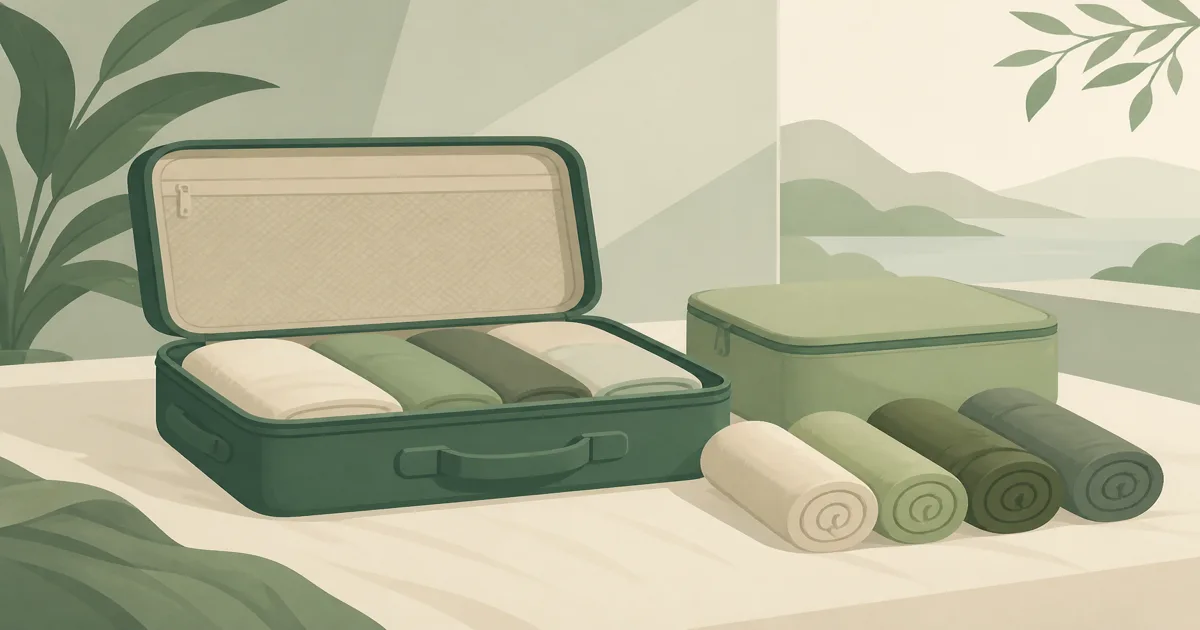
How to Roll Clothes for Packing: Ranger Roll and Wrinkle Fixes
Packing cubes
Rolling saves space on soft fabrics but creases structured shirts. Learn the ranger roll, when to fold instead, and how to keep rolls from unraveling inside a packing cube.
Our picks
Rolling gets credit for saving space it does not always deliver. How to roll clothes for packing starts with knowing what rolling actually does: it removes air gaps in soft fabrics and makes small items easy to stack. It is not a universal upgrade over folding, and it can wreck a dress shirt in one tight spiral.
For cube layout and trip-long organization, read how to use packing cubes. If you are deciding between cubes and vacuum-style bags, see packing cubes vs compression bags. Shirt-by-shirt layout, including when a button-down should stay folded, lives in how to pack shirts in a suitcase. For the woven shirts you choose to fold, a packing folder keeps them as flat as the rolled cubes around them.
For a broader view of the subject, the packing cubes category gathers every related guide, and the best travel packing cubes guide has the full set of picks. This page owns how to roll clothes for packing: the roll itself, tightness, and wrinkle control.
What rolling actually changes in your bag
Rolling works best on fabrics that bend without holding a sharp crease: jersey tees, workout tops, socks, underwear, and soft leggings. The roll turns a flat item into a dense cylinder with less trapped air than a loose fold. That helps when you fill small gaps in a cube or line rolls along the spine of a backpack.
Rolling does not magically shrink structured cotton, linen, or wool blazers. Those fibers remember fold lines and roll lines equally, but roll lines spiral through the whole shirt. You trade one center crease for five diagonal ones. That is a bad swap for anything you plan to wear to dinner or a meeting.
Volume savings also depend on what sits next to the roll. A tight roll beside a hard shoe box still wastes space. Rolling helps most when combined with vertical stacking inside a cube, not when tossed loose into a suitcase corner.
Does rolling save more space than folding?
For soft knits, yes, by roughly a third of their loose-folded volume. For structured cotton, linen, and wool, no. A rolled tee packs to about a 3-inch cylinder and a medium cube holds about 10 to 12 of them; a folded dress shirt keeps its shape better and barely shrinks at all.
The honest way to test it is one item at a time. Roll a tee and fold an identical tee, then compare the two stacks against the same cube. Most travelers find rolling works for soft layers and fails on anything with a collar, a placket, or a pressed front seam.
Step-by-step roll method for soft clothes
Lay the item flat on a bed or table. Smooth wrinkles with your hand before you start. For tees, fold one side inward so the sleeve meets the center, repeat on the other side, then fold the hem up about one third toward the neckline.
Roll from the neckline or waistband down toward the folded edge. Keep tension even. You want a cylinder that holds its shape, not a wrung towel. Tuck the loose end under the roll or into a sock if it unravels easily.
For underwear and socks, fold in thirds and roll small. Stand rolls vertically in a cube like file folders in a drawer. You can see each item from the top and pull one without disturbing the stack. That vertical orientation is what makes rolling work inside organizers.
Pair similar weights together. Do not stack heavy sweatshirt rolls on top of thin tee rolls for a week. Lightweight items compress under weight and set wrinkles you will notice on day three.
How tight should a roll be?
Firm but not stretched. A roll that holds its shape in your hand without squeezing water out of the fabric is about right, and it usually lands around 2 to 3 inches across. Over-tight rolls stretch knit necklines and set creases into cotton, so if you see the fabric thinning at the center, ease off.
The ranger roll and the army roll, explained
Two named methods come up in every packing video, and they are close cousins. The army roll and the ranger roll both tuck the ends of a garment into itself so the finished bundle cannot unravel. The difference is mostly how tightly you fold the sides before you start rolling.
Here is the version we use. Lay a tee flat, fold both sleeves in so the shirt is a clean rectangle, then fold the bottom hem up two or three inches to create a pocket. Roll from the collar down, keeping the roll tight. When you reach the folded hem, pull that pocket over the bundle and tuck the edge in. The shirt now holds itself closed.
It works on tees, henleys, and uniform shirts. It is slower per item than a plain roll, so save it for the pieces you stack loose in a duffel or the clothes you want to grab without sorting. For a suitcase full of cubes, a plain tight roll is faster and just as tidy.
Flat or rolled? Decide item by item
Stop applying one method to the whole bag. Sort by fabric and by whether the item touches a hanger at home.
- Roll: tees, tanks, workout tops, leggings, underwear, socks, pajamas, soft knit dresses.
- Fold flat: button-downs, blazers, chinos with a pressed front, dress trousers, anything linen.
- Either, based on the trip: jeans, thick cotton sweatpants, casual button-downs. Roll them for a casual trip, fold them if you plan to hang them at the hotel.
- Compress instead: puffy jackets, bulky hoodies, fleece. Rolling these creates a dense doughnut that stacks worse than a flat fold.
If you are unsure, fold one shirt and roll an identical tee for the same trip. See which arrives cleaner. Most travelers keep rolling for soft layers and folding for everything that touches a hanger.
The table is a starting point, not a rule. Sort by fabric and by whether the item touches a hanger at home, and the pile splits itself into rolls on one side and folds on the other.
When to fold instead of roll
Fold anything with a collar, placket, or crease you want to keep: button-downs, chinos with a front crease, blazers, and dress trousers. Fold along natural seam lines and stack flat in a cube with tissue or a dry-cleaning bag between layers if the fabric is fussy.
Jeans and thick cotton pants can go either way. Rolling works for casual trips where wrinkles do not matter. Folding flat works better if you will hang them in a hotel closet and care about the front seam line.
Bulky knits and hoodies usually belong in a compression cube, not in tight rolls. Rolling a thick hoodie creates a dense bundle that is harder to stack than a flat fold with compression. Match the tool to the item.
Should you roll or fold jeans?
Fold jeans flat for anything you plan to hang. Rolled, a pair makes a dense 5-inch bundle that stacks awkwardly; folded, it lies about 12 inches wide and an inch thick and slides into a 22-inch carry-on without a fight. Roll them only for casual trips where the front seam does not matter.
Wrinkle control while rolling and packing
Start with dry, lightly pressed items when possible. Rolling damp gym laundry is how mildew smells start. Rolling a shirt straight from the dryer with no cool-down period sets heat creases into cotton.
Do not over-tighten rolls. Stretching the fabric while rolling pulls collars and waistbands out of shape. A roll that feels snug in your hand is enough. If you see the fabric thinning at the center, you went too tight.
Use cube walls as support. Loose rolls bouncing in an oversized cube unroll and crease each other. Fill the cube so rolls sit shoulder to shoulder with minimal side-to-side play. A cube that is the right width matters more than the perfect roll technique.
Layer soft rolls on top of folded structured items, never the reverse. Weight crushes rolls less than it crushes folded shirts, but heavy rolls on top of a folded dress shirt will still print lines through the stack. Pack firm on bottom, soft on top inside every cube.
The packing rules people ask about
Three number rules show up in every packing conversation, and they all do the same job: cap how much you bring so the bag closes.
The 3-3-3 rule is three tops, three bottoms, and three pairs of shoes. It suits a long weekend or a trip with laundry access. Because the count is small, every piece has to mix with the others.
The 3-5-7 rule is three bottoms, five tops, and seven accessories. It works for a week when you can rewear bottoms two or three times. The accessory count is where socks, underwear, belts, and a scarf go.
The 5-4-3-2-1 rule is five tops, four bottoms, three pairs of shoes, two bags, and one hat or outer layer. It fits a week to ten days and pairs well with rolling, because soft tops roll small and take the least space.
None of these rules tell you how to pack. They tell you when to stop. Once the list is capped, rolling and folding decide whether the pile fits the bag you already own.
Rolling inside packing cubes and suitcases
Assign one cube to soft rolls: tees, underwear, socks, and workout tops. Keep structured folds in a separate cube so you never hunt through rolls for a collared shirt. Color or label cubes if you share a bag.
When you place cubes in the suitcase, orient the roll openings upward when the bag opens flat on a bed. You grab from the top of the cube without lifting the whole brick. That access pattern is why rolling and cubes work well together.
Leave a finger of slack when you zip the cube closed. Overstuffed roll cubes turn into hard cylinders that fight the suitcase lid. If the cube zipper bows, move two rolls to another zone or wear one layer on the plane.
On the return trip, dirty rolls can go into a laundry cube without rerolling tightly. Loose dirty clothes breathe better and are easier to wash when you get home. Save tight rolling for clean items headed out the door.
How many tees fit in a cube?
A medium cube holds about 10 to 12 rolled tees standing on edge, or roughly 8 to 10 once you add socks and underwear in the gaps. A 40-liter carry-on usually takes one cube of soft rolls plus a folded stack, which is why the packing rules matter more than the roll itself.
Which cube keeps rolled clothes from coming undone
The Gonex Compression Packing Cubes (4-pack) is the low-commitment way to find out whether compression cubes are right for you. Four pieces, soft nylon, and a compression zip that flattens a stack of soft rolls. It pairs with the roll method on this page because the cube holds the shape your hands created.
Buy this set if your problem is rolls spreading across a suitcase, not if your problem is too many bulky jackets. For thick knits, a structured compression cube does a better job. For tees, socks, and underwear, this is enough.
Who it is for: Travelers who roll soft clothes and want them to stay rolled, and anyone testing cubes before buying a bigger set.
Skip if: You pack heavy denim and boots into one cube. The thinner fabric shows the load.
When a basic cube set is enough
The Dot&Dot Large Packing Cubes 5pc Set is the pick for a checked bag rather than a carry-on. Each cube is 17.5 by 12.75 by 3.25 inches, so a whole category of rolled clothes goes in one place and stays there. The translucent fabric and mesh top let you see the contents before you open a cube, which matters when three cubes look alike.
Buy this set if you roll a lot of soft clothes into a 26-inch suitcase and want them grouped by day or by traveler. In a slim carry-on, a mixed set of medium and small cubes fits better than five large ones.
What to use for the shirts you fold
The Eagle Creek Pack-It Reveal Garment Folder is the other half of a rolling-based system. It handles the clothes that should never be rolled: button-downs, dress trousers, and anything with a collar. The mesh front lets you see what is inside without opening it, and the top handle makes it easy to move between the suitcase and a hotel closet.
Size it against your bag before you buy. A large folder fits most carry-ons, but it occupies a flat rectangle that a cube would otherwise use. The medium folder weighs about 9.5 ounces and the large about 15 ounces, so on a strict weight limit the board is the thing to leave behind. If your suitcase runs tight on the return leg, fold the shirts over the board and skip the folder instead.
Who it is for: Work trips, weddings, and any packing list with a shirt that has to look sharp on arrival.
Skip if: You wear knits and tees all trip. The folder is dead weight when nothing in the bag has a collar.
Common rolling mistakes to avoid
Rolling everything by default is the biggest one. Travel photos love a uniform stack of rolls. Real trips need folded trousers and compressed jackets mixed in. One method for all fabrics is how dress shirts arrive unusable.
Rolling wet or damp items guarantees odor and wrinkles. Pack a small dry bag for swim gear and let it air-dry before it touches cotton rolls in the same cube.
Skipping smoothing before the roll locks tiny wrinkles into the fabric for the whole flight. Ten seconds of hand smoothing beats five minutes of hotel ironing later.
Using rolling as a substitute for editing what you pack also fails. Rolls do not turn seven bulky outfits into a carry-on. Outfit caps and cube zones still decide whether the bag closes. Rolling changes how a garment packs; it does not change how much the bag holds.
Pair rolling with the rest of your packing system
Rolling fits inside the zone layout from how to use packing cubes. Cubes keep roll stacks from unraveling in the suitcase. The cube system keeps categories separate so rolls and folds do not merge into one pile by day two.
If you still need volume after rolling soft layers, compare packing cubes vs compression bags before buying vacuum bags that need a hotel iron to undo. Compression cubes often handle bulky knits with less hassle than re-rolling every item mid-trip.
How to roll clothes for packing is straightforward once you split fabrics by type: roll soft, fold structured, stack vertically, do not over-tighten, and keep cubes snug enough that rolls stay put. The rest of the trip is organization, not tighter spirals.
Frequently Asked Questions
Does rolling clothes save space in a suitcase?
Rolling saves space on soft, stretchy fabrics like tees and underwear by reducing air gaps. It does not shrink structured cotton or linen much and can add creases to dress shirts. Roll the soft stuff, fold the things with a collar.
How tight should I roll clothes for packing?
Firm but not stretched. Over-tight rolls stretch knit necklines and set creases into cotton. A roll that holds its shape without squeezing water out of the fabric is about right.
Is it better to lay clothes flat or roll them in a suitcase?
It depends on the fabric. Soft knits wrinkle less rolled because there are no hard fold lines. Structured shirts, blazers, and creased trousers wrinkle less folded and stacked flat. Most bags end up with both: rolled knits in a cube, folded wovens in a folder.
What is the 3-3-3 rule for packing clothes?
Three tops, three bottoms, and three pairs of shoes, or sometimes three days of clothes for a longer trip with laundry. It is a simple cap that stops you packing seven of everything. Pick pieces that mix, and you get more outfits than the count suggests.
What is the 3-5-7 rule in packing?
A common capsule formula: three bottoms, five tops, and seven accessories or small items. It works for a week when you can rewear bottoms. Roll the tops and bottoms, then use the accessory count for socks, underwear, and belts.
What is the 5 4 3 2 1 rule when packing?
Five tops, four bottoms, three pairs of shoes, two bags, and one hat or outer layer. It is another capsule cap, and it works best for a week to ten days. Roll the soft pieces and fold the structured ones so the counts still fit the bag.
Should I roll or fold dress shirts?
Fold dress shirts. Rolling creates spiral creases along the placket and collar that are hard to steam out in a hotel room. Roll tees. Fold anything with a collar or a pressed seam.
What is the ranger roll and does it work?
The ranger roll is a tuck-and-fold method that turns a shirt or a pair of pants into a tight, self-contained bundle that does not come undone. It works well on tees and uniforms and keeps a packed bag tidy. It is slower per item than a plain roll, so use it for the pieces you plan to stack loose.
Do rolled clothes wrinkle less than folded clothes?
Rolled soft knits often wrinkle less because there are fewer hard fold lines. Folded structured fabrics wrinkle less than rolled structured fabrics. Match method to fabric, not habit.
Can I roll clothes inside packing cubes?
Yes. Roll soft items and stack them vertically in a cube like file folders. Put folded structured items on the bottom of the same cube if you need both in one zone. A cube that is packed snug keeps rolls from unrolling in transit.
Is rolling better than compression bags?
Rolling is a fold method. Compression bags are a volume tool. Roll soft layers first, then compress bulky items in a cube or bag if you still need space. See our compression comparison for the tradeoffs.
What should I pack with rolled clothes to keep them tidy?
A compression cube like the Gonex Compression Packing Cubes keeps rolls from bouncing loose. For the woven shirts you are not rolling, a garment folder like the Eagle Creek Pack-It Reveal gives them a flat home in the same bag.