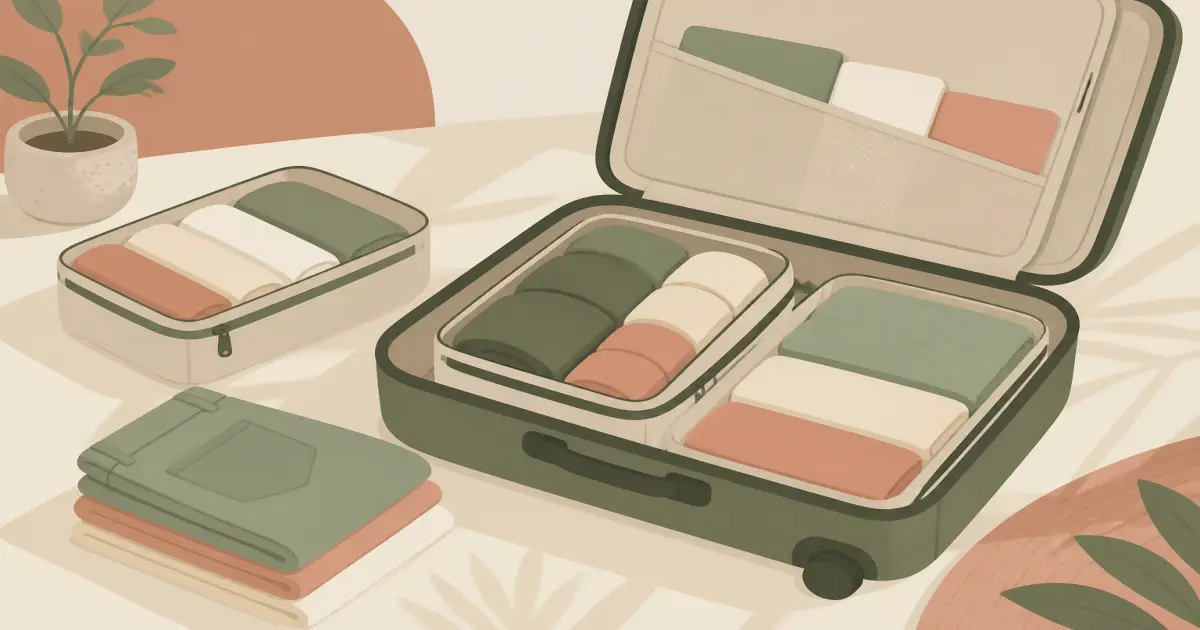
How to Pack Pants in a Suitcase: Fold, Roll, and Stack
Carry-on
How to pack pants in a suitcase depends on the fabric. Roll soft chinos, fold dress trousers along the crease, and keep denim from crushing nicer pairs.
Our picks
Pants take more volume than people plan for. Most airline carry-on limits are 22 by 14 by 9 inches, so a pair of jeans that should have stayed home is the difference between a closed lid and a fight. This guide covers methods by fabric and layouts that still fit a carry-on. Fold structured trousers. Roll casual pants. Keep wool out of a max-compressed cube.
See also how to roll clothes for packing, how to pack jeans in a suitcase, and how to pack shirts in a suitcase.
If you are still weighing options, our carry-on packing category maps out the whole category, while our how to pack a carry-on for a week guide lays out the plan.
Which method fits which pair of pants?
Fold dress trousers and anything with a pressed crease. Roll chinos, joggers, and leggings. Jeans go either way, so pick the method that keeps their weight away from lighter clothes. The table below matches the method to the fabric before you pack.
How many pairs of pants do you need for a week?
Two or three wearable pairs plus the pair you wear on the plane cover a week when tops remix. A week of travel rarely needs five unique bottoms. Pack the pairs you will actually rotate and edit out anything that only matches one shirt.
Wear the bulkiest pair on the plane when that is comfortable. That single choice frees a surprising amount of cube space. For trip-length planning, see the business trip packing list and the weekend packing list.
How do you fold dress trousers?
- Empty the pockets.
- Align the existing crease and smooth the legs.
- Fold in half at the knees, or drape over a suitcase length so the crease stays true.
- Stack with soft tissue or a dry-cleaner bag if the fabric is clingy.
- Place near the top of the bag or in a shallow cube that shoes will not crush.
How do you keep the crease without an iron?
Hang the trousers the moment you reach the hotel, and let steam from a hot shower relax the fold lines. Fold along the factory crease before you pack, and lay the pair flat near the top of the bag rather than rolling it. Do not roll pressed wool just to save 2 inches. The spiral crease is harder to remove than a simple fold line.
Should you roll or fold jeans?
Roll jeans for casual trips and fold them for dressier ones. A roll keeps the pair compact and stops the heavy seams from spreading, but folding a pair flat can reduce deep wrinkles in some washes. Whichever you choose, keep denim in its own cube or its own layer so it does not mark lighter fabric.
How do you roll casual pants?
Lay jeans or chinos flat, fold once lengthwise if needed, then roll from the cuffs toward the waistband with steady pressure. Park the rolls side by side in a cube so you can pull one pair without unpacking the whole pack. That matters in small hotel rooms, and it is why rolling works better for casual trips.
Rolling also keeps a pair together with its own roll shape, so a chino does not slide under a stack of shirts. Keep the waistband on the outside of the roll and the cuffs tucked in, which stops the roll from unspooling in the cube.
How do denim and heavy fabrics change the plan?
Denim is heavy and stubborn. Limit it to one or two pairs, place it under or beside softer clothes, and never on top of a silk blouse packet. Wash and fully dry denim before packing, because damp jeans in a closed cube are a smell problem by day two.
Where do jeans go so they do not mark other clothes?
Put denim at the bottom of the cube or the bottom of the layer, with a cube wall or a T-shirt buffer between it and lighter fabric. Thick seams press marks into anything soft that sits against them. If you pack 2 jeans, wear 1. That removes both the weight and the risk.
Where do pants go in the suitcase?
Pants belong in the middle layer, above shoes and below dress items, so their bulk is spread across the bag. Keep hard soles away from nice fabric and keep pressed trousers away from the crush pressure of the lid.
If your suitcase has cross straps, pad the pants layer with a soft sweater before tightening. Straps that press directly on trousers leave lines you cannot steam out at the hotel. A 26-inch checked bag gives you room to fold a dress pair flat, while a 22-inch carry-on rewards rolling and a tight cube.
Field notes from our counter
How do you use a cube without overstuffing it?
Leave about 1 inch of zipper ease so you can add a pair mid-trip after laundry. If the cube is a brick, you will fight the suitcase lid. A medium cube is the right home for most carry-ons and holds about 3 rolled casual pairs or 2 folded dress pairs. Compression cubes can shrink cotton volume, but go easy on dress trousers; see best compression packing cubes for the background.
Do you need a compression cube for pants?
Not usually. Pants are flat, not fluffy, so a plain cube already keeps them together. A compression cube helps most on a 22-inch carry-on where every inch counts, or on a long trip with bulky denim. For a weekend with one chino and one jean, a standard medium cube is enough.
Color-code cubes if you also pack shirts separately. The pants cube stays closed when you only need a top. For a full cube workflow, our how to use packing cubes guide walks the layout.
How do you refresh pants on arrival?
Hang dress pants immediately. Casual rolls can stay in the cube until you need them. A quick steam or a hot shower hang fixes most travel wrinkles on chinos. If you live out of the suitcase for a short stay, keep the pants cube accessible near the top after the first unpack so you are not digging nightly.
Business trips and weekend variants
Business trips often need one dress pair and one backup. Weekends may need one jean and one chino. Match the method to the calendar, not to a generic packing list. For a formal trip, pack the dress pair with the jacket method from the suit guide and keep the trousers flat nearby.
Belts, suspenders, and pocket squares need a small accessories pouch. Leaving a leather belt threaded in packed pants adds weight in the wrong places and can crease legs around the buckle. For coil and buckle habits, see how to pack belts for travel.
Laundry mid-trip
If you wash pants mid-trip, dry them fully before they re-enter a cube. Jeans especially. A damp pair can humidity-damage the whole pants cube. Hang overnight and pack in the morning. Travel laundry bags help quarantine dirty bottoms, so see our travel laundry bag guide for dirty-and-clean separation.
Common mistakes
Packing 5 jeans for 3 days. Rolling suit trousers. Crushing pants under a toiletry bottle that leaked. Leaving belts in pants loops so buckles dent other clothes. Packing pants that only match one shirt you did not bring. Forcing the zipper instead of removing a pair.
Build outfits before you fold, and edit to two or three pairs when possible. That is the whole job.
Final takeaway
Packing pants well comes down to fabric. Fold pressed trousers along the crease, roll chinos and joggers, and keep denim low and buffered so it does not mark lighter clothes. Two or three pairs cover a week, and a medium cube keeps them together. Follow that and how to pack pants in a suitcase stops being a pre-trip argument with your zipper.
Frequently Asked Questions
Is it better to roll or fold pants?
Roll casual pants and joggers. Fold dress trousers along the existing crease. Jeans can go either way; rolling saves space, folding can reduce deep denim wrinkles for some washes.
Should pants go in packing cubes?
Yes. A medium cube for pants keeps them from sliding around. Do not overfill until the zipper fights you.
How many pairs do I need for a week?
Often two or three wearable pairs plus what you wear on the plane. Mix-and-match beats a unique pant per day.
How do I keep a crease in dress pants?
Fold along the factory crease, lay flat near the top, and hang on arrival. Avoid tight rolls on pressed trousers.
Can I pack pants with shoes?
Keep soles bagged and away from light fabrics. Pants can share a suitcase zone with shoes if a barrier layer sits between them.
How do I pack jeans without crushing other clothes?
Limit denim to one or two pairs and place it under or beside softer items. A cube wall or a T-shirt buffer keeps thick seams from pressing marks into lighter fabrics.
How big a cube do pants need?
A medium cube holds about three rolled casual pairs or two folded dress pairs. A large cube takes four rolled pairs with room for a belt pouch.