Ski Trip Packing List: Layers, Wet Gear, and a Bag That Still Closes
Carry-on
A ski trip packing list is mostly layers, a wet-gear pouch, and honest boot math. Pack outfits that mix, isolate damp gloves, and wear the bulky coat on travel days.
Our picks
A ski trip packing list fails when people pack a closet of “just in case” sweaters and then wonder why the zipper will not close. The mountain needs layers, dry feet, and a place for gear that comes home wet. Everything else is optional.
This is a US-traveler list for a typical weekend or week at a resort, with rental skis as the default. Wear the bulkiest coat through the airport. Compress clothes, not wet gloves. Park anything that comes home soaked in a dry sack so one pair of gloves does not flavor the whole cube stack.
Helpful siblings: how to pack boots in a suitcase, how to pack a jacket in a suitcase, and best compression packing cubes if you want cube sizing detail.
For a wider starting point, our full carry-on section maps out the whole category, with our how to pack a carry-on for a week guide covering the leading options.
Clothes and layers to pack
Start with what you will wear on the hill, not a fashion week. One shell (or ski jacket you already own), one insulated midlayer, two base-layer tops, two base-layer bottoms if you run cold, and ski pants. Add one casual outfit for dinners and travel days.
Wear the bulkiest coat through the airport. That is free suitcase space. Pack thinner merino or synthetic layers in cubes. Cotton hoodies soak, stay wet, and waste volume. Save cotton for a lodge tee if you must.
Gloves, a neck gaiter, and a beanie are small but easy to lose. Keep them in one cube or pouch so you are not hunting at 7 a.m. Extra ski socks: one pair per day plus one spare. That is enough if you can dry a pair on the radiator overnight.
The ski trip packing list checklist
Cross this off before you sit on the bag.
On-snow kit
- Ski jacket and pants (or bibs)
- Helmet if you own one, or plan to rent
- Goggles in a hard case
- Gloves or mittens, plus thin liners if you like them
- Neck gaiter or buff
- Ski socks (one pair per day + spare)
Layers
- 2 base-layer tops
- 1–2 base-layer bottoms
- 1 midlayer (fleece or light puffy)
- Casual outfit for town
- Underwear and sleep layer
Wet and dirty control
- Roll-top dry sack or waterproof pouch
- Small laundry bag or spare cube for worn base layers
Travel admin
- ID, booking confirmations, season pass or lift tickets
- Phone, charger, and a short cable pouch
- Daily meds and lip balm (altitude is rude to skin)
Skip unless you know you will use it
- Third pair of casual shoes
- Extra “nice” sweater that does not layer under the shell
- Full-size toiletries that belong in checked bags only
If you fly with your own boots, read the boot packing guide before you invent a new method at 11 p.m.
Wet gear, boots, and the hotel reset
Snowmelt is the packing problem people forget. Gloves, gaiters, and sock liners come back damp. If they go into the same cube as clean merino, the whole bag smells like a locker by day three.
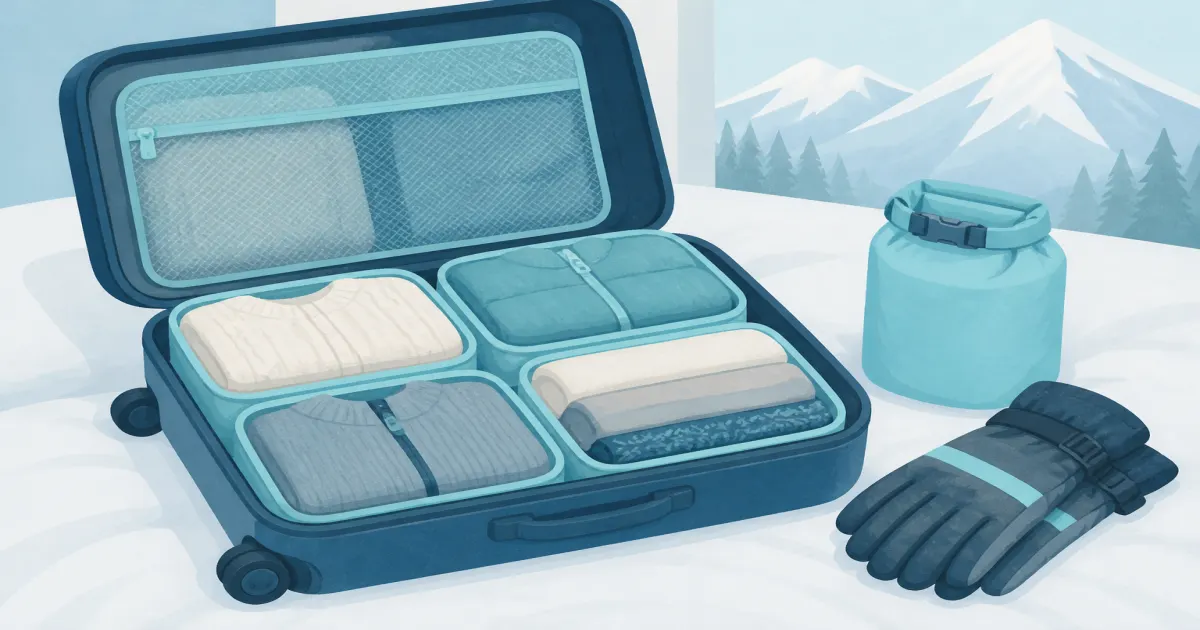
Use the Sea to Summit Lightweight Dry Sack (8L) as the wet zone. Roll the top closed. That sack can live in the suitcase at night and ride in a daypack if you walk back in wet snow. It is not a substitute for drying gear when you have a radiator or boot dryer. It is the quarantine bag.
Boots are a space tax. Rental boots stay at the shop. If you bring your own, stuff them with socks and isolate soles. Do not let a wet boot tongue sit on a sweater.
At the hotel, explode the system once: hang the shell, open the dry sack, and put tomorrow’s base layers in one grab cube. Ski mornings are faster when you are not unpacking the whole suitcase.
How to fit it in a carry-on
Compression is for clothes, not for helmets. Load BAGSMART 6-Set Compression Packing Cubes with base layers and the midlayer. Zip the cube first, then pull the compression zipper until it is firm, not brick-hard. Over-compression stresses zippers and does not shrink a helmet.
Park the dry sack along one side or in a lid pocket. Keep goggles in a hard case near the top. Documents and a phone charger stay in a personal-item pocket you can reach at security.
If the bag still will not close, you packed a second coat. Wear one, pack one midlayer, and stop. A ski trip packing list is a layering system, not a sweater archive.
For a longer clothes-only method that still works here, see how to pack a jacket in a suitcase.
What to buy for this kit
You do not need a ski-branded cube set. You need compression for bulk and a waterproof pouch for wet items.
BAGSMART 6-Set Compression Packing Cubes handle the clothes. Split tops, bottoms, and socks so a lodge reset is one cube, not a rummage.
Sea to Summit Lightweight Dry Sack (8L) handles gloves and anything that came home wet. Eight liters is enough for a weekend of damp accessories without becoming a trash bag.
If you already own a laundry pouch, you can skip a second sack and keep the dry sack for truly wet items only. Do not use a thin grocery bag as your whole system. It tears, and it does not roll closed.
Common ski packing mistakes
Packing three puffy jackets “for warmth” while skipping a second base layer. Warmth is layers you can vent, not a pile of insulation you never wear.
Putting wet gloves in a zip cube with clean socks. That cube becomes the smell of the trip.
Checking a bag only because the coat is bulky, then packing the coat anyway. Wear it.
Bringing cotton socks for ski days. They stay wet. Merino or ski-specific pairs dry faster and blister less.
Leaving goggles loose under boots. Lenses scratch. Use a case or the helmet nest.
Fit this list into the rest of your kit
If the mountain is one stop on a longer winter vacation, keep this ski block in its own cubes and do not merge it with city clothes. For general trip clothes without ski boots, the vacation packing list still applies: mix layers, isolate wet items, and edit shoes.
For cube habits that survive a hotel reset, use how to use packing cubes. For dirty clothes after the last run, the travel laundry bag guide covers the out-tray.
Frequently Asked Questions
Can I pack a ski trip in a carry-on?
Often yes if you rent skis and boots at the mountain, wear the bulky coat, and compress layers. Hard ski boots plus a helmet usually force a checked bag or a boot bag.
Where do wet gloves go at the end of the day?
In a dedicated dry sack or waterproof pouch, never in the clean base-layer cube. Air them in the hotel if you can, then bag them for the next transfer.
How many ski socks should I pack?
One pair per ski day plus one spare. Merino pairs that dry overnight beat a huge stack of cotton socks.
Should I pack a full extra ski outfit?
No. Pack mix-and-match layers: two base layers, one extra midlayer, and the shell you wear. A third complete “look” is how bags explode.
Do I need a separate boot bag?
If you fly with your own alpine boots, yes or use a dedicated boot packing method. See our boot guide. Renting on arrival is the simplest carry-on move.
What about goggles and a helmet?
Wear or carry the helmet. Nest goggles in a hard case or inside the helmet. Do not crush lenses under boots.