How to Pack Boots in a Suitcase Without Crushing Everything
Organizers
Learn how to pack boots in a suitcase by wearing the heaviest pair, stuffing shafts, bagging soles, and parking boots on the wheel edge away from soft cubes.
Our picks
Boots are shoes with opinions. Tall shafts steal suitcase inches, hard heels punch soft cubes, and outdoor soles transfer grit into everything you planned to wear to dinner. Learning how to pack boots in a suitcase is mostly editing and placement, not clever origami.
For regular sneakers and flats, use how to pack shoes in a suitcase. For containment gear, see best shoe bags for travel. This page is the boot-specific lane.
For a wider starting point, our travel organizer guides collect the rest of the series.
Edit before you pack
Ask whether both pairs must travel. Wear hiking or winter boots on the plane when they are the bulkiest item. Pack dress boots only if the itinerary needs them. “I might want options” is how carry-ons fail.
If you only need boots for outdoor days, wear them out and leave the fashion pair home. Empty volume is more useful than a second shaft you never lace.
Count the outfit jobs. Trail day, city walking, and one dress dinner might still be two pairs if one boot covers trail and city. Three pairs usually means you are packing a closet, not a trip.
Stuff the shaft, then bag the sole
Empty boot shafts collapse and crease. Stuff them with socks, a soft belt, or a rolled shirt you do not mind reshaping. The goal is a stable tube, not a concrete column.
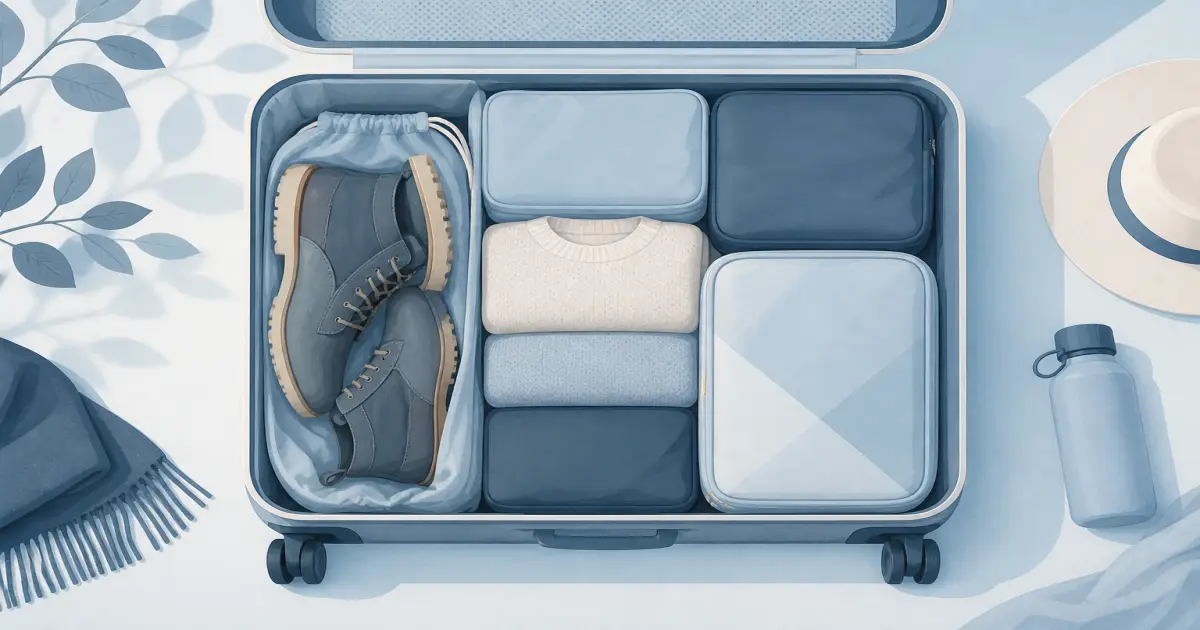
Bag each boot so soles cannot touch clean clothes. The Eagle Creek Pack-It Isolate Shoe Sack works for many ankle and mid boots. Tall shafts may need a larger shoe bag or a clean plastic wrap around the sole only. Do not skip containment because the boots “look clean.” City sidewalks disagree.
If the sack is snug, do not force a zipper until it screams. Use a larger shoe bag or wrap the sole and lower shaft, then tuck the cuff with soft clothes so grit stays trapped.
Stuffers should be dry. Damp socks inside a closed boot become mildew by day three, especially in a warm checked hold.
Placement: wheel edge, not the soft middle
Park bagged boots along the wheel end or a long side wall. Heavy pairs low keep the suitcase stable when you roll it. Lay shafts parallel to the longest wall so they do not create a tent under the lid.
Keep shirt and dress cubes away from heel points. If something must share space with boots, use a compression cube of knits or a jacket layer that can take the shape. For jacket packing, see how to pack a jacket in a suitcase.
In soft duffles, the same rule applies with more urgency. Boots migrate toward the center when the bag slumps. Pin them to an end with compression cubes on either side so the shaft cannot roll onto a dress.
Carry-on vs checked decisions
Wear boots boarding when they are the heaviest pair and your airline is picky about carry-on size. That choice frees the case and keeps you from wrestling tall shafts into an overhead bin.
Check the bag when boots plus a week of clothes will not close without sitting on the lid. There is no prize for a carry-on that explodes on the jet bridge.
If you check boots, keep a lighter walking shoe or sandal in the personal item in case the bag is delayed. That is not overpacking. That is a delay plan.
When a cube set helps anyway
Boots themselves rarely belong inside packing cubes. Cubes still help by shrinking the soft goods around the boot lane. BAGSMART 6-Set Compression Cubes with Shoe Bag gives you compression for jackets plus a shoe bag so soles and clothes stop sharing a zipper.
Build the boot lane first, then drop cubes beside it. Do not build a perfect cube stack and then force boots in at the end. That is how lids refuse to close.
Compression is for knits and jackets around the boots, not for crushing a leather shaft flat. Leather needs shape more than it needs another inch of suitcase space.
Common boot packing mistakes
Packing boots upright like bookends wastes height and bruises whatever sits on top. Lay them down.
Leaving mud on the tread is a gift to your shirts. Wipe soles before they enter the bag.
Checking a bag only because of boots is sometimes the right call. If tall shafts force a carry-on war every trip, wear them or check the case without guilt.
Nesting delicate jewelry or chargers inside a boot “for safety” is a bad surprise when you forget and walk through security in those boots. Keep valuables in the personal item.
Quick checklist
- Wear the heaviest boots when possible.
- Stuff shafts with soft, dry items.
- Bag each boot sole.
- Place boots low along the wheel edge.
- Compress jackets and knits around the boot lane, not on top of empty shafts.
- Keep a backup walking shoe accessible if boots are checked.
For overall suitcase structure, see best way to pack a suitcase and how to organize a suitcase. For jeans and pants volume around a boot lane, see how to pack jeans in a suitcase. Heading to the mountain with more than boots? Use the ski trip packing list for layers and wet-gear control. If the boots are for the mountain, use the ski trip packing list so wet gloves and layers do not land in the same cube.
Frequently Asked Questions
What is the best way to pack boots in a suitcase?
Wear the heaviest boots if you can. Pack the lighter pair stuffed, bagged, and laid along the wheel edge away from soft clothes.
Should boots go in packing cubes?
Usually no. Cubes are for soft clothes. Boots belong in shoe bags along the case edge or under a clothing layer that can take the shape.
How do I keep boots from crushing shirts?
Never stack a shirt cube on an empty boot shaft. Stuff the shaft, bag the sole, and keep boots low and lateral.
Can I pack hiking boots in a carry-on?
Yes if volume allows. Wear them boarding when they are the bulkiest pair. Confirm your airline’s carry-on size before forcing tall shafts.
Do boot trees belong in luggage?
Soft stuffers work better than rigid trees for most trips. Trees add weight and length you do not need for a week away.
What if boots are wet?
Air-dry first when you can. If you must pack damp boots, bag them separately and keep them away from clean cubes.