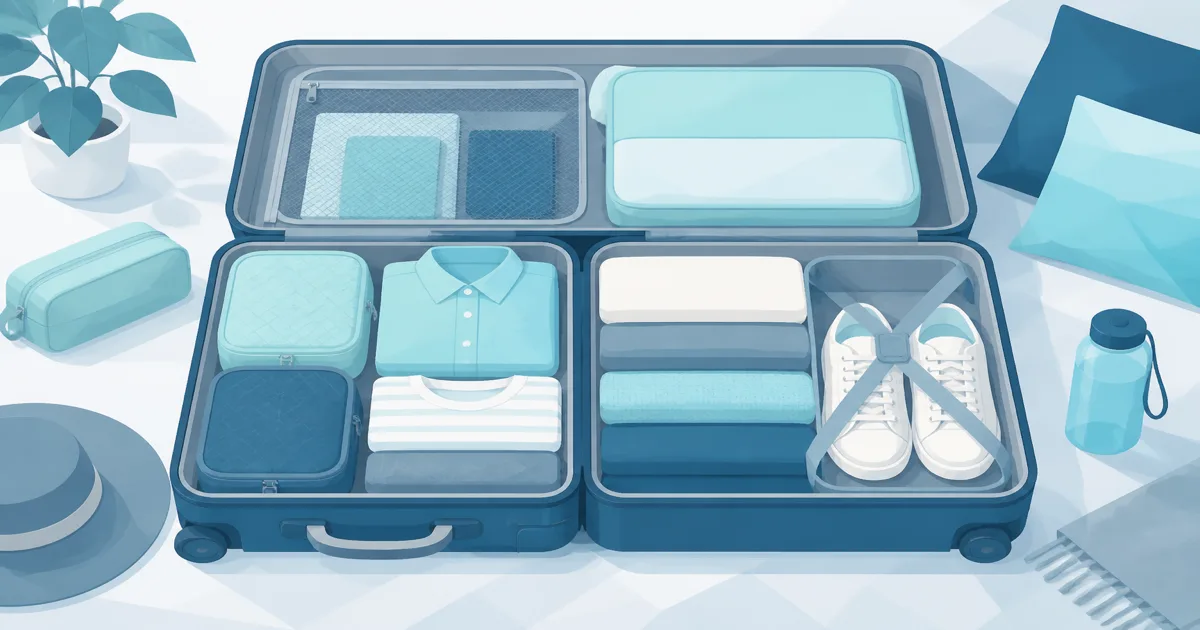
Best Way to Pack a Suitcase: Zones, Order, and Weight
Packing cubes
The best way to pack a suitcase is not about folding tricks. It is about zones, packing order, weight placement, and leaving room for the ride home.
Our picks
Most packing advice jumps straight to rolling vs folding and skips the part that actually keeps a bag usable on day four. The best way to pack a suitcase starts with layout: where each category lives, what touches the wheels, and what you need to grab without unpacking half the bag at security.
If you use cubes, read how to use packing cubes for the daily workflow. For a full week in one bag, pair this with how to pack a carry on for a week. This page is the suitcase-level system: zones, order, weight, and the flex gap most people skip.
To keep reading around this topic, the full packing cubes section holds all the related posts, with our best travel packing cubes guide covering the leading options.
Start with zones before you fold anything
Decide categories first: tops, bottoms, underwear and socks, outerwear, shoes, toiletries, tech, and documents. Each category gets one home in the bag. Mixing categories is how suitcases turn into one tangled pile by day two.
Shoes never share a cube with shirts. Liquids never sit under a stack of folded knits. Tech and chargers get a flat pouch near the top so security day does not require excavating the entire bag. If two people share one suitcase, color-code zones or use distinct cube colors so nobody grabs the wrong stack at 6 a.m.
Write a quick packing list from your zones before you touch the suitcase. Editing at the list stage is faster than repacking three times at the bed. Limit how many mix-and-match outfits you pack. Do not pack one full outfit for every day on the calendar. Five bottoms and five to seven tops covers most week-long trips if you plan one laundry stop.
Pack heavy and flat on the bottom
The bottom layer sits directly over the wheels and spine of the suitcase. That is where weight belongs. Pack shoes in shoe bags or shower caps, soles facing the wall of the bag to keep dirt off clothes. Place them heel to toe along the long edge to use depth without wasting width.
Flat heavy items go next: a compressed jacket, a folded pair of jeans you will not wear on the plane, or a toiletry kit in a leak-proof bag. Keep this layer as level as possible. A lumpy bottom makes every cube above it tilt and crease.
If you own compression cubes, use them on bulky soft layers here, not on dress shirts. Compress hoodies and fleeces until the cube is firm, not rock-hard. Over-compression at the bottom still crushes structured items stacked above it, so keep rigid pieces out of this layer entirely.
Build the middle layer for daily access
The middle is where you live during the trip. Pack bottoms and tops cubes here, positioned so the zipper faces up when you open the bag flat on a hotel bed. Underwear and socks can sit beside tops or in a slim cube along the hinge side.
Structured shirts and trousers belong in cubes or folded stacks with firm items on the bottom and soft rolls on top. You want to pull one cube, grab tomorrow's outfit, and zip the rest shut without rebuilding the entire layout. That only works if the middle layer is sorted by category, not by "whatever fit."
Keep one outfit near the top of a cube if you have an early meeting or a red-eye landing. Nothing kills a travel morning like digging to the bottom of a stuffed pouch for a clean shirt. Plan access when you pack, not when you are late for checkout.
Top layer, liquids, and the flex gap
The top layer holds items you reach for often: a light layer, a foldable tote, tech pouch, and your quart bag of liquids if you fly carry-on. Never bury liquids under clothing. TSA and hotel spills both punish that choice.
Leave a deliberate flex gap along the hinge side or across one end of the bag. One to two inches of unused space is not wasted room. It is insurance for a book, a bottle of wine in checked luggage, or a dirty laundry cube on the return leg. Bags packed to 100% at home fail on day three when reality adds volume.
Close the suitcase and lift it by the handle. If the lid fights the zipper or bows outward, remove one cube or move bulk to your personal item. A bag that closes with force at home will pop open in an overhead bin or at baggage claim.
Weight distribution for wheels and handles
Wheels and handles dictate how a bag behaves in airports and hotel lobbies. Heavy items low and centered over the wheel axle keep the suitcase from tipping when you let go. Heavy items stacked toward the handle side make the bag feel like it is constantly trying to face-plant.
If you use a two-wheeled rollaboard, pack slightly heavier toward the back panel that sits against your legs when towing. For four-wheel spinners, center weight over the wheel base and avoid loading one side with shoes while the other side holds only tees. Uneven weight makes spinners drift and annoy everyone in the terminal.
Lift test at home: roll the bag on each wheel, then pick it up by the side handle. If one orientation feels dramatically heavier, shift a shoe bag or toiletry kit an inch toward center. Small moves at packing time prevent chronic wrist strain on long connections.
Common mistakes that undo good layouts
Packing every outfit as a complete bundle sounds organized until you need one shirt from the middle of six wrapped sets. Zone by category, not by day. Days change; categories stay stable.
Skipping the flex gap is the other classic error. Travel adds volume: dirty clothes, gifts, conference swag. If you leave zero slack, you either buy a duffel at the airport or sit on your suitcase at checkout. Both options cost more than packing one fewer "just in case" item upfront.
Unpacking entirely at the hotel destroys the system in one move. Live out of your zones. Worn items go to a laundry cube or bag nightly. Tomorrow's outfit moves to the top of the relevant cube. Two minutes of reset beats a full repack on the last night.
Overstuffing cubes until zippers bow creates creases and broken pulls mid-trip. A cube should close cleanly with a finger of slack. If you are forcing zippers, you packed too much or need a bigger bag, not tighter folding.
A simple three-piece packing kit
Put tops, bottoms, and underwear in the Veken 8 Set Packing Cubes so you are not excavating the whole bag for socks.
Hang bathroom gear in the BAGSMART Hanging Toiletry Bag (Medium) the moment you reach the hotel sink.
Keep shoes in the Eagle Creek Pack-It Isolate Shoe Sack along the wheel edge. That trio beats buying twelve novelty organizers you will not refill the same way twice.
When to go deeper on gear
This layout works with or without packing cubes. Cubes just make zones harder to accidentally merge. If you are shopping for a first set, read how to use packing cubes before you buy six identical pouches that do not fit your bag interior.
For carry-on-only weeks, the outfit math and checklist in how to pack a carry on for a week pair directly with the zone order on this page. Same system, tighter edit on what enters the bag at all.
If you check the bag, a TSA-accepted lock from the best TSA locks guide lets screeners inspect it without cutting the zipper. That is a checked-bag extra, not part of the packing layout.
The best way to pack a suitcase is repeatable: zones, bottom-heavy order, accessible middle, protected top, flex gap, and nightly reset. Nail that sequence and folding debates become minor details instead of the whole trip.
Frequently Asked Questions
What is the best way to pack a suitcase for a week?
Zone your clothes by category, put heavy flat items on the bottom, daily-access cubes in the middle, and leave a flex gap near the hinge. Wear your bulkiest jacket and shoes on travel days.
Should heavy items go on the bottom of a suitcase?
Yes. Shoes, toiletry kits, and compressed jackets belong low and centered over the wheels. That keeps the bag from tipping and protects lighter clothes from crushing.
Do I need packing cubes to pack a suitcase well?
No, but cubes make zones easier to maintain mid-trip. You can zone with zip bags or folded stacks if you reset nightly and keep categories separate.
How much empty space should I leave in a suitcase?
Aim for one to two inches of flex near the lid hinge or along one side. You need room for souvenirs, a dirty laundry cube, or a jacket you pick up on the trip.
Is rolling or folding better for suitcase packing?
Roll soft tees and underwear. Fold structured shirts and trousers. The best way to pack a suitcase mixes both inside each zone based on fabric type.
How do I keep a suitcase organized during the trip?
Live out of zones instead of dumping everything into hotel drawers. Move worn items to a laundry zone nightly and repack before checkout so the return flight is not a scramble.