Packing Cubes for Backpacking: What Works in a Soft Pack
Packing cubes
Packing cubes for backpacking keep clothes findable in a soft pack. Use slim cubes, protect hip-belt balance, and skip suitcase-only giant sets.
Our picks
Soft packs reward flexible organizers. Hard suitcase cube sets often fight the curve of a backpack. This guide covers how to use packing cubes for backpacking without wrecking balance or wasting grams. Keep cubes soft. Put heavier items close to your back.
For general backpack loading, see how to pack a backpack for travel. For compression tradeoffs, see best compression packing cubes. For cube habits that transfer from suitcases, see how to use packing cubes.
For a broader view of the subject, the packing cubes buying guides holds all the related posts, while our best travel packing cubes guide lays out the top picks.
Why backpacks need a different cube strategy
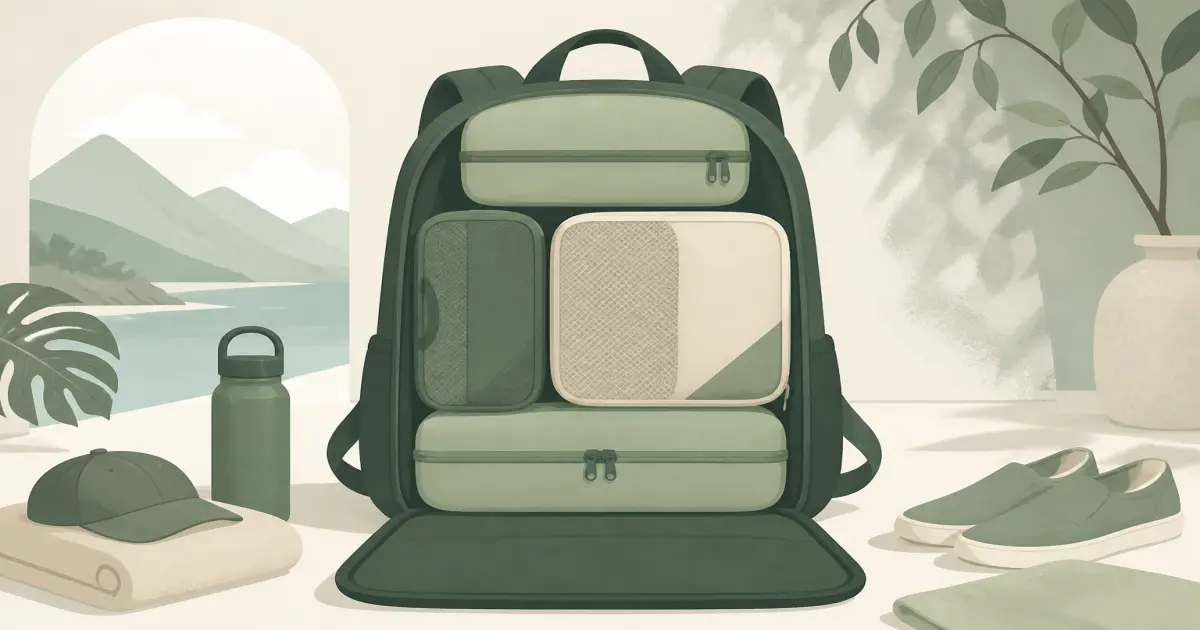
Suitcases are boxes. Backpacks are soft tubes with a harness. Cubes that tessellate perfectly in a checked bag can leave voids and hard corners against your spine. Packing cubes for backpacking should bend a little and stack in a vertical column you can still cinch.
Organization still matters. Digging for socks at the bottom of a stuffed main compartment wastes hostel time and invites dumping everything on a bunk. Cubes let you pull one category without exploding the pack.
Weight distribution still beats neatness. A tidy pack that pulls you backward is a failure. Place denser cubes close to your back.
Choose sizes that fit the pack, not the product photo
Skip the giant 6-piece suitcase kit for a 40L travel pack. You want:
- One small cube for underwear and socks
- One medium cube for shirts or bases
- Optional second medium for pants or sleep clothes
- A separate dirty bag that is not a structured cube if possible
Measure your pack’s main compartment width if you can. Cubes that are slightly narrower than the pack pack better than cubes that jam the zippers sideways.
Mesh tops help you see contents in dim hostels. Solid panels hide dirty laundry better. Many backpackers mix one mesh and one solid.
Compression without killing loft
Compression packing cubes for backpacking are useful for cotton bulk and dirty clothes. They are a poor idea for down jackets you still need loft from the same day. Compress travel clothes you will not wear until later. Keep insulating layers in a roomier stuff sack or lightly filled cube.
Do not crank every strap to the max. Over-compression creates dense bricks that are hard to nest around a hydration sleeve or laptop sleeve. Leave a little give so the pack can still shape to your back when you tighten the harness.
If your pack has a bottom sleeping-bag compartment, that zone may want a stuff sack more than a cube. Cubes shine in the main clothes column.
Loading order that protects balance
- Place heavy, dense items close to your back at mid-height (near hip belt).
- Stack clothing cubes in a vertical column in the main bay.
- Keep rain shell and often-grabbed layers near the top or in lid pockets.
- Put dirty laundry in an easy-access cube or bag so clean clothes stay closed.
- Fill side pockets with bottles and soft items, not your densest cube.
This order is how packing cubes for backpacking stay helpful instead of decorative. If the pack feels rear-heavy, move dense cubes higher and closer to the harness, not lower toward the butt.
Hip belt pockets are for snacks and transit cards, not a steel bottle that swings. Cubes belong inside.
Dirty-clean rules on multi-day trips
Bring a dedicated dirty pouch. Do not reopen the clean cube every night to shove sweaty shirts back in. That is how clean layers smell like the trail by day three.
If you rinse clothes in a sink, dry them fully before they re-enter any cube. Damp fabric in a closed cube is a mildew project. Hang what you can overnight and pack dry in the morning.
Color-code zippers if your cubes look alike. Grabbing the wrong cube on a dark bus is a small misery you can avoid.
When to skip cubes
Ultralight hikers living in two shirts may prefer one silnylon sack. Short weekend packs with huge exterior pockets may not need cubes at all. Travel backpacking with office clothes, gym kit, and sleepwear is where packing cubes for backpacking earn their zipper weight.
If cubes add friction every time you repack, simplify. Two cubes beat five. The goal is faster mornings, not a perfect grid for Instagram.
Pair with suitcase skills when trips mix modes
Many trips start with a backpack and end with a train suitcase, or the reverse. Keep cube sizes compatible with both when you can. Skills from how to pack a suitcase with packing cubes still apply: category cubes, leave expansion room, and do not force shoes into clothing cubes.
For carry-on sized travel packs, also skim best packing cubes for carry-on so your set still works if you switch to a wheeled bag mid-trip.
Common mistakes
Buying only large cubes leaves no place for small categories. Buying rigid frames that will not bend creates pressure points on your back. Packing cubes so full they will not compress with the pack harness fights every cinch strap.
Another mistake: putting all electronics in a cube buried at the bottom when security or train Wi-Fi needs them. Keep a tech pouch separate near the top. Cubes are for soft goods first.
Cube picks for backpacks
Start with the Gonex Extensible Compression Cubes (4-pack). Fewer pieces and soft nylon keep the pack from turning into a stiff rectangle against your back.
The Veken 8 Set Packing Cubes help when you want mesh lids and category zones for hostel days. Skip filling every cube if your pack is under 40L.
Use BAGSMART 6-Set Compression Packing Cubes on one bulky layer cube only. Compress fleeces, not every shirt. Keep heavy items close to your spine and leave a flex gap for food or a rain shell.
Bathroom kits for pack trips are a separate problem. Keep liquids out of clothing cubes and use a compact hang kit or slim dopp from best toiletry bag for backpacking.
A simple starter setup
For a week of mixed city backpacking, try one small underwear cube, one medium shirt cube, one medium pants/sleep cube, and one dirty bag. Add a slim compression cube only if cotton bulk forces it. That kit teaches you whether packing cubes for backpacking fit your style before you invest in a huge matching set.
Adjust after one real trip. The best system is the one you still use on day five when you are tired.
Frequently Asked Questions
Do packing cubes for backpacking actually help?
Yes for organization and dirty-clean separation. They help less if you buy rigid suitcase cubes that will not flex with a soft pack.
Compression cubes or regular cubes?
Slim compression cubes help when volume is tight. Do not crush insulating layers you need loft from at camp or in a hostel.
How many cubes should I bring?
Often two or three small/medium cubes beat one giant cube. Leave room for a dirty bag and a rain shell.
Where should heavy cubes sit in the pack?
Close to your back and near the hip belt for balance. Do not hang dense cubes at the outer bottom if they pull you backward.
Are cubes worth it for ultralight hiking?
Sometimes a single stuff sack is lighter. Cubes shine more on travel backpacking with mixed clothes and city days than on gram-counting thru-hikes.
Do I need packing cubes in a 40L backpack?
Skip the giant six-piece suitcase kit. Use one small cube for underwear and socks, one medium cube for shirts or bases, and a separate dirty bag. Cubes slightly narrower than the pack fit better than ones that jam the zippers.