How to Pack Sweaters in a Suitcase Without Losing Half Your Space
Packing cubes
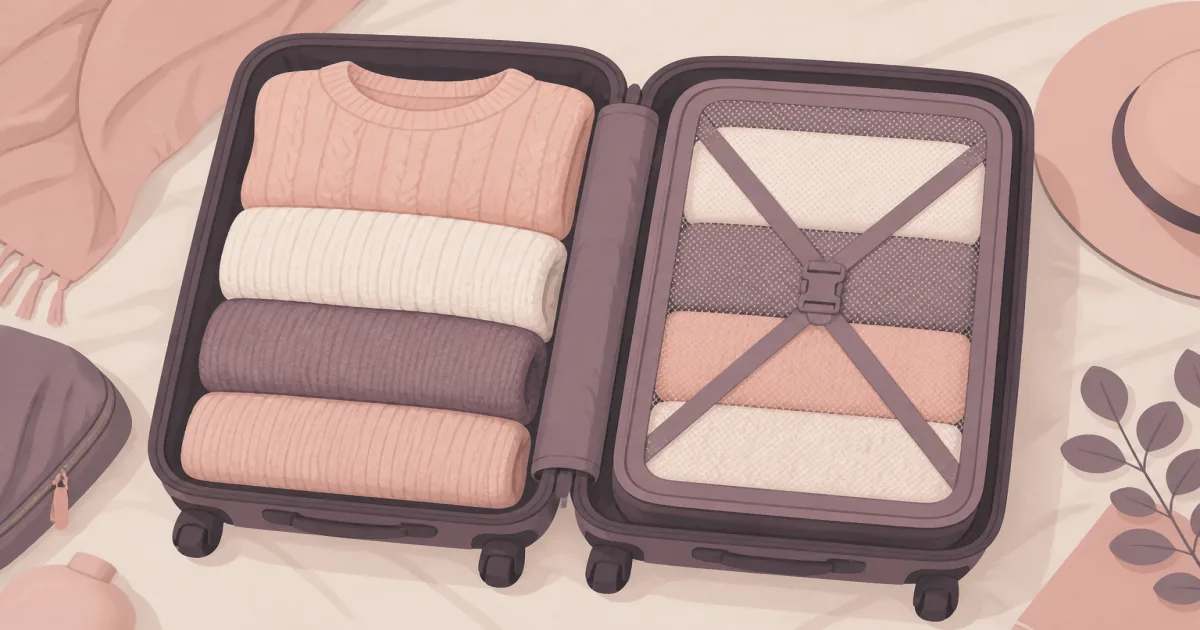
Pack sweaters by thickness, not by outfit count. Fold sturdy knits, roll soft ones, and use light compression so bulky layers stop eating your suitcase.
Our picks
Sweaters take up more space than anything else in cold-weather packing. They look innocent on a bed and then take the volume of three shirts once the suitcase closes. A standard carry-on is 22 by 14 by 9 inches, and knits are the layer that fills it fastest. Learning how to pack sweaters in a suitcase is mostly about controlling bulk without crushing everything else. For coats and blazers, use our jacket packing guide instead of forcing the same method.
If the decision is still open, our full packing cubes section collects the rest of the series, and the best travel packing cubes guide compares the best options.
Which packing method fits which knit?
Fold heavy cable knits and cardigans. Roll thin merino and cotton knits. Compress only when the bag is tight, and never take cashmere to full squash. The table below matches the method to the yarn before you touch a suitcase.
How do you pack a sweater so it keeps its shape?
Sort the pile into thick and thin first. Thick knits get folded into soft rectangles so the yarn is not twisted into a tight spiral. Thin knits get rolled. Keep the two piles apart so a heavy cable knit does not press a crease into a light merino layer.
Fold thick sweaters and cardigans
- Button or zip cardigans closed.
- Lay the sweater face down and smooth the sleeves flat.
- Fold the sleeves in so you get a long rectangle.
- Fold once or twice from the hem toward the neckline.
- Stack two heavy sweaters at most in one cube before you compress.
Stop folding when the stack is already dense. Extra folds do not create space. They only set deeper creases. A folded cable knit that is about two inches thick is the right finish; if it fights the fold, you are folding a sweater that should be rolled.
Roll thin merino and cotton knits
Smooth the sweater flat, fold once into a narrow band, then roll from the hem with light tension. Soft rolls nest well along the sides of a suitcase or inside a medium cube. This is the same motion as rolling clothes for packing, just with less force on thicker yarn.
Roll from the hem, not the neck, so the collar stays on the outside of the roll and does not crush. A rolled thin knit takes about half the footprint of the same sweater folded, which is why it goes in the cube first and the folded stacks go on top.
Does compression damage sweaters?
No, for most travel knits. Compression itself is just pressure, and wool recovers when it is unpacked. The real damage comes from friction against rough fabric and from leaving a delicate knit at maximum squash for days. Stop when the fabric feels firm, not rock hard.
How much does one compression cube hold?
Our own test filled a medium compression cube two ways. It held two heavy cable knits, or four thin merino layers, once the second zipper was closed. A large cube took three folded sweaters plus a fleece. We measured the second zipper pulling a packed medium cube from about 4 inches tall down to roughly 2.5 inches, which is real volume back in a 22-inch carry-on. One medium cube is usually enough for a week of knits.
How do the two compression sets compare?
Both sets use the same idea: a second zipper flattens a loosely packed cube. The BAGSMART set gives you more sizes for a full suitcase, and the Gonex set costs less when you only need one or two cubes for a short trip.
Which knits should never be compressed?
Keep cashmere, angora, and any loosely knit wool out of a max-compressed cube. Those yarns pill when they rub, and a hard squash presses the fibers together for the whole trip. Fold them loosely, put a dry-cleaner bag or a soft T-shirt between them and denim, and give them air on arrival.
Where do sweaters go in the suitcase?
Sweaters belong in the middle layer. Shoes and chargers go low, sweaters take the center, and wrinkle-sensitive shirts sit near the top in a folder. That order keeps hard soles away from knits and lets the soft middle layer absorb the pressure of the lid.
Can sweaters protect other items?
Yes, within reason. A rolled fleece or a sturdy cotton knit can wrap a camera, a bottle, or a pair of boots. Do not use a favorite cashmere sweater as shoe padding. The sweater takes the wear instead.
Field notes from our counter
How many sweaters do you need for a week?
Two sweaters are usually enough for a week when they mix with three or four shirts. Pack outfits that layer, not one sweater per day. A thin merino layer under a heavier cable knit gives you three or four different looks from two garments.
Lay the outfits on the bed before you pack and remove any knit that only works with one shirt. Two sweaters that mix with three shirts beat five sweaters that match one outfit each. If evenings are colder than days, pack one nicer knit for dinner and one tougher fleece for daytime walking.
Should you wear a sweater on the plane?
Yes, if the trip is cold. Wearing the bulkiest sweater on the plane frees the volume of one folded sweater in the bag, and it doubles as a blanket on a chilly flight. You stay warm and save the space.
How do you keep sweaters wearable mid-trip?
Hang or fold sweaters over a chair back as soon as you reach the hotel. Most travel wrinkles in knits relax with a little air and gravity. Rewear the same knit on non-consecutive days with a different shirt underneath so it does not feel like a uniform.
If a sweater picks up suitcase smell, hang it near a shower for a few minutes or air it by an open window. Heavy washing mid-trip is rarely needed for a short stay. Dirty knits go in a laundry bag, not back into the clean sweater cube, because one sweaty layer can scent a whole compression set. See our travel laundry bag guide for dirty-and-clean separation.
Wool, cotton, and synthetic knits
Wool and wool blends wrinkle less than travelers fear, but they pill when rubbed against denim in a tight cube. Keep rough fabrics in a separate cube when you can.
Cotton sweaters take wrinkles more easily and hold moisture longer. Give them air on arrival. Synthetic fleece compresses well and dries fast, which makes it a strong travel layer even if it looks less polished. Cashmere and other delicate yarns deserve the gentlest fold and no hard compression, and if the trip is short, wear it on the plane.
Business trips vs weekend knits
Business trips often need one clean crewneck or cardigan that sits under a jacket. Pack that knit with shirts, not with gym layers, so lint and zipper teeth stay away from the face fabric.
Weekend trips can use softer cubes and more aggressive compression. The clothes are usually more casual, and wrinkles matter less than fitting a second pair of shoes. For jacket-plus-sweater combos, pack the jacket with its own method and keep the sweater mid-bag. Squashing a blazer and a chunky knit into one compressed cube creases them both.
Common sweater packing mistakes
Packing every cold-weather knit you own just in case. Max-compressing cashmere. Storing sweaters under shoes. Rolling a thick cable knit so tight the shoulders warp. Leaving knits compressed for days after you arrive because unpacking feels optional.
Edit first, pack second, decompress on arrival. That order fixes most sweater packing problems without buying new luggage. If you still need volume back, our guide to compression packing cubes shows how far the second zipper really goes.
Final takeaway
Packing sweaters well is a bulk problem first and a wrinkle problem second. Sort by thickness, fold the heavy ones, roll the soft ones, and use light compression only when the suitcase needs the volume back. Pack two sweaters that mix, wear the bulkiest one on the plane, and give the knits air when you arrive.
Frequently Asked Questions
Should I roll or fold sweaters?
Roll soft, thin knits. Fold thicker sweaters and cardigans so the shoulders stay flatter. Mixed methods beat one rule for every yarn.
Do compression cubes ruin sweaters?
Light compression is fine for most travel knits. Stop when the fabric feels hard and board-like. Delicate wool blends prefer a gentle fold without max squash.
Where should sweaters sit in the suitcase?
Middle of the bag, above shoes and below wrinkle-sensitive shirts when you can. Soft knits can also line the sides as padding.
Can I wear the bulkiest sweater on the plane?
Yes. Wearing one heavy layer is the easiest way to free suitcase space on cold-weather trips.
How many sweaters do I need for a week?
Often two, if you can rewear and layer. Pack outfits that mix, not a new sweater for every day.
What about cashmere?
Fold loosely, avoid hard compression, and unpack to hang as soon as you arrive. A dry-cleaner bag layer can reduce friction against denim.
Are sweaters different from jackets for packing?
Yes. Jackets often need collar and structure care. Sweaters are mostly about bulk and yarn. See our jacket packing guide for coats with shoulders and hoods.