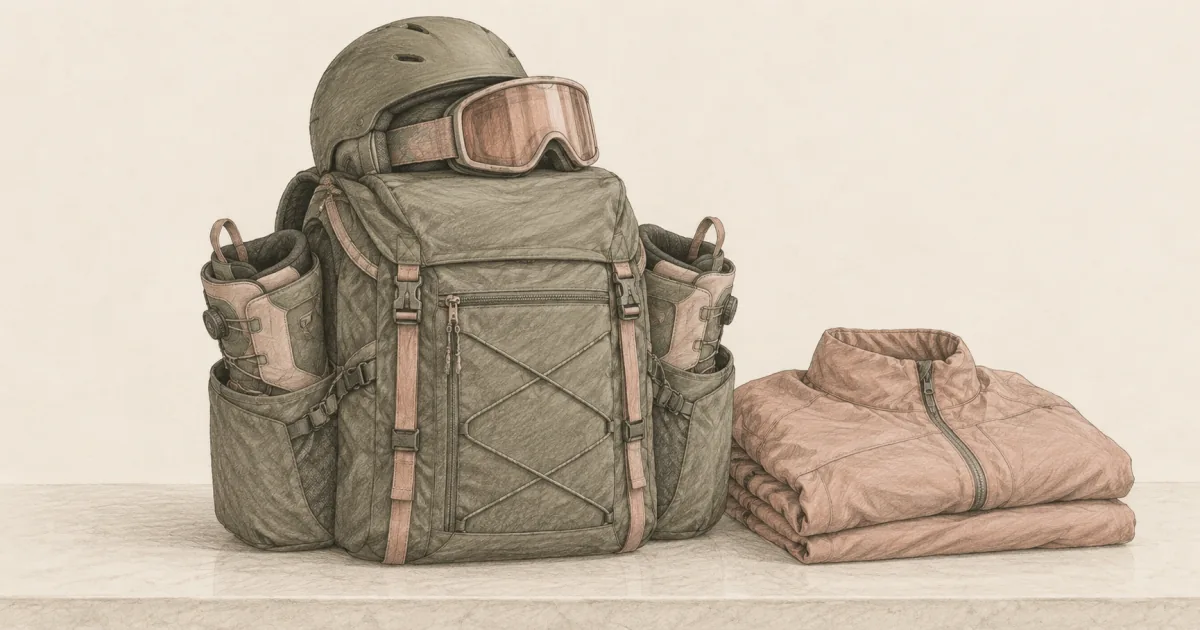
Best Snowboard Boot Bag (2026): 2 Gear Haulers Worth the Space
Organizers
A snowboard boot bag is the one gear hauler that keeps wet boots off your jacket. These two picks fit carry-on limits, drain slush, and organize a full mountain kit.
Our picks
The best snowboard boot bag for most riders is the Unigear 50L. Boots are the dirtiest, heaviest, and most awkward item in a snowboard kit, and a dedicated boot bag gives them their own bay so they stop soaking your jacket and crushing your goggles. The right bag also gives you a dry place to stand while you change in and out of boots.
The wrong bag is easy to spot. It is too tall for an overhead bin, it has one giant compartment that mixes wet boots with clean layers, and it has no drainage or waterproof base for slush. This guide sticks to bags that separate boots from the rest and survive a wet parking lot.
If you are building the rest of the trip kit, the ski trip packing list covers what to bring, the organizers category collects the small gear bags, and the shoe bags guide handles footwear separation inside a suitcase.
What is the best snowboard boot bag?
The best snowboard boot bag for most riders is the Unigear 50L, because it fits an overhead bin, holds boots in side bays, and folds down a standing mat. The RESVIN 65L is the better value when you drive or check a bag and want six compartments for a full kit.
How do the two picks differ?
They split by travel style, not by quality. The Unigear 50L is the carry-on bag: about 20 by 13 by 12 inches, one main compartment plus side boot bays and a helmet pocket. The RESVIN 65L is the car-and-checked bag: about 22 by 11 by 13 inches, six compartments, and a heavier 1680D nylon shell.
Which one holds its shape on a wet day?
Both use a waterproof base, but the workflow is the same: a fold-down back-panel door that doubles as a standing mat. You step onto the mat to change boots, so snow stays off your socks. The Unigear base is low-temperature tarpaulin; the RESVIN base is a tarpaulin panel under a 1680D shell.
What size boot bag do I need?
Match the volume to the trip. A 40 to 50-liter bag takes boots, a helmet, goggles, gloves, and one layer and can still fly. A 60 to 80-liter bag also fits a jacket and spare base layers, but it usually gets checked or driven.
A 50-liter bag runs about 20 inches tall, which is why it clears most US overhead bins. A 65-liter bag runs about 22 inches, which is where the bin fit starts to fail, so measure before you buy if you plan to fly.
Can you carry a snowboard boot bag on a plane?
Yes, if it stays under the common US carry-on limit of about 22 by 14 by 9 inches. The Unigear 50L fits at about 20 by 13 by 12 inches. A 65-liter bag like the RESVIN generally exceeds the limit and is checked or driven.
What makes a bag carry-on friendly?
A narrow shell and a soft build. Soft bags squash an inch or two when they are not packed to the zipper, so a lightly loaded 50-liter bag slides into a bin where a hard case will not. The tradeoff is protection: a soft bag cushions less than a rigid shell, so keep goggles in a padded pocket.
Should a boot bag be padded?
Some padding is worth it around the boot bays and the back panel, so buckles and edges do not dig into your back and goggles survive the trip. A fully rigid hard case is overkill for most riders. A soft bag with a padded back and a reinforced bottom covers the job.
How do you keep snow out of a boot bag?
Look for a waterproof base and a standing mat. Melting snow pools at the bottom of a bag, so a tarpaulin or coated-nylon base keeps the interior dry, and a fold-down door gives you somewhere dry to change boots.
Why do side boot bays beat one big compartment?
Side bays keep the heavy pair close to your back for balance, and they keep wet soles away from clean layers. A single open compartment mixes wet boots with your jacket, and you end up with a damp layer on day one.
What small features actually help?
Compartments for a helmet, goggles, and gloves keep small items from vanishing into the boot bay. A padded back panel protects your spine from buckles. External straps that hold a board or skis let you move the whole kit in one trip. The RESVIN adds two carabiner clips and a snowboard strap with a hidden storage hole, so the strap tucks away when you are not using it.
Top pick: Unigear Ski Boot Bag Backpack 50L
The Unigear 50L is the pick for most riders because it balances volume and carry-on size. At about 20 by 13 by 12 inches, it fits most US overhead bins, so you can carry boots and a helmet aboard and skip the checked-bag roulette with your gear. The three compartments keep boots, helmet, and accessories apart, and the boot bays take US men's boots to about a 12.5. It retails around $70 at the live price.
The wet-weather details matter more than they sound. The shell uses a tarpaulin and 1050D nylon mix, and the bottom is lined with waterproof, low-temperature tarpaulin, so snow on the ground does not soak through. The back-panel door folds down as a standing mat for changing boots, and the padded mesh back panel keeps buckles from digging in. Owners add that the chest and waist straps spread the load so your shoulders are not carrying everything.
Buy this if you want one bag for boots, helmet, and layers that can fly in the cabin on a short trip. Skip it if you pack a full kit with a jacket and several layers, or you plan to carry it for miles, because the 65-liter option below and a padded hip belt serve those trips better.
Best value: RESVIN 65L Ski Boot Bag
The RESVIN 65L is the value pick when capacity matters more than cabin fit. Six compartments plus external pockets keep a full snowboard kit sorted, and the 1680D nylon shell with a tarpaulin bottom handles wet snow. A rear door folds down as a standing mat, and a strap on the outside secures a snowboard or skis. It sells for about $40, which is why it is the value pick.
The tradeoff is travel style. At 65 liters and about 22 by 11 by 13 inches, it is too big for most overhead bins, so it belongs in the car or under the plane. The padded mesh back panel is comfortable for the walk from the lot, but there is no load-bearing hip belt, so keep the load reasonable.
Buy this if you drive to the mountain or check a bag and want room for a full kit, including a jacket and spare layers. Skip it if you fly carry-on only, because the 50-liter Unigear fits the cabin and this one does not.
What to look for in a snowboard boot bag
Boot bays on the sides beat a single open compartment. Side bays keep the heavy boots close to your back for balance, and they keep wet soles away from clean layers. Look for a bay that fits your boot size with a little room to spare.
A waterproof base and drainage matter more than a rain flap. Melting snow pools at the bottom of a bag, so a tarpaulin or coated-nylon base keeps the interior dry. A standing mat or fold-down door lets you change boots without standing in slush. External straps that hold a board or skis are a bonus on trips where you carry everything at once.
What to skip
Skip a boot bag with one giant compartment. It mixes wet boots with clean clothes, and you end up with a damp jacket on day one.
Skip a hard case if you want to fly carry-on. Hard cases protect well, but they are heavy and rarely fit an overhead bin. Save them for checked gear on a dedicated ski trip.
Skip a bag with no waterproof base. Snow melts, and a soaked bottom turns the whole bag damp. A tarpaulin or coated base costs little and saves the trip.
Skip a bag that is too big for your car or your airline. A 90-liter bag that never leaves the closet is worse than a 50-liter bag you actually use. Match the volume to the trip.
If you would rather pack boots inside a suitcase, our how to pack boots guide covers that layout.
Final takeaway
Pick the Unigear 50L Ski Boot Bag for most riders. It fits an overhead bin, separates boots from the rest, and handles a wet parking lot with a waterproof base and a standing mat. Choose the RESVIN 65L Ski Boot Bag when you drive or check a bag and want six compartments for a full kit.
Pack the soft items in cubes so they stay clean next to wet boots, and see the ski trip packing list for the rest of the mountain kit. The organizers category collects the small gear bags that keep everything findable.
Frequently Asked Questions
What is the best snowboard boot bag?
The Unigear 50L Ski Boot Bag is the best pick for most riders. It fits carry-on limits, holds boots in side bays up to about a US men's 12.5, and keeps a helmet, goggles, and a layer separate. The RESVIN 65L is the better value when you want more room and do not need to fly with it.
Can you carry a snowboard boot bag on a plane?
Yes, if it is small enough. Look for a bag under 22 by 14 by 9 inches, which is the common US carry-on limit. The Unigear 50L fits at about 20 by 13 by 12 inches. Bigger bags like the 65L RESVIN are usually checked or driven, because they exceed the overhead-bin size on most airlines.
What size boot bag do I need?
A 40 to 50-liter bag is enough for boots, a helmet, goggles, gloves, and one layer, and it can still fly. Step up to 60 to 80 liters when you pack a jacket, spare layers, and a full kit, and plan to check it or drive. Match the volume to how you travel, not to how much gear you own.
Do ski and snowboard boot bags work for both?
Mostly yes. The boot bays on these bags are sized for alpine ski and snowboard boots, so the same bag carries either. The main difference is the external straps: a snowboard needs a wider strap or a board sleeve, while skis clip to loops. The RESVIN includes a snowboard strap, and the Unigear uses adjustable webbing.
Should a boot bag be padded?
Some padding matters, especially around the boot bays and the back panel. Padding keeps buckles and edges from digging into your back and protects goggles in transit. That said, a fully rigid hard case is overkill for most riders. A soft bag with a padded back panel and a reinforced bottom covers the job.
How do you keep snow out of a boot bag?
Look for a waterproof bottom and a standing mat. The Unigear and RESVIN both use a tarpaulin or nylon base and a back-panel door that folds down as a mat, so you stand on the mat instead of in the slush. Drain holes and a wipe-down after each trip keep the interior dry.
Can I pack more than boots in a boot bag?
Yes, that is the point of the bigger bags. A 50-liter bag takes boots, helmet, goggles, gloves, and one layer. A 65 to 80-liter bag also swallows a jacket, spare base layers, and a small toiletry kit. When you add clothes, use packing cubes so soft items stay separate from wet boots.
Are hard or soft boot bags better?
Soft bags are the better choice for most riders because they squash into a car trunk and often fit carry-on limits. Hard cases protect better on checked flights, but they add weight and rarely fit an overhead bin. Pick soft for carry-on and car trips, and a hard case only if your gear flies checked on every trip.