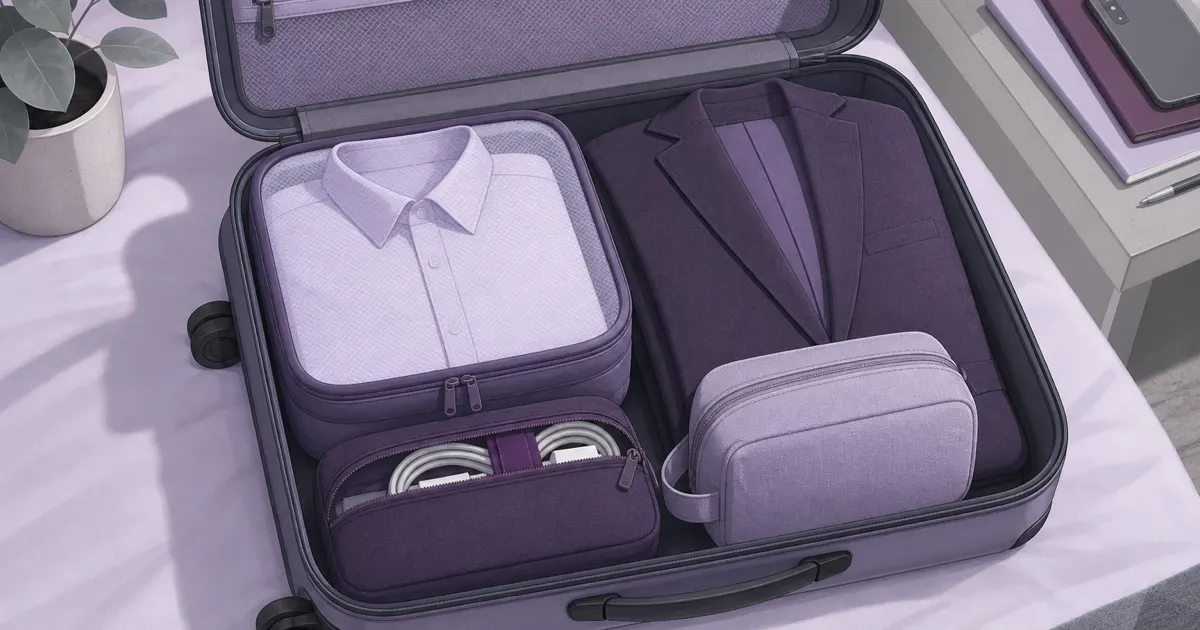
Best Packing Cubes for Business Travel: Keep Shirts Ready for Work
Packing cubes
Business travel needs a small, predictable cube layout. Protect work shirts in one structured cube, keep casual clothes separate, and leave quick-access items near the top.
Our picks
A work trip rarely needs an entire matching cube set. It needs a layout you can open late at night and understand immediately. Your meeting clothes should stay away from gym gear, chargers should be easy to find, and tomorrow's shirt should not sit beneath everything else.
Use our business trip packing list to decide what to bring. If shirt wrinkles are the main problem, read how to pack shirts in a suitcase before choosing a cube.
Business trips need cubes that stay slim in a carry-on and still open on a hotel desk. Keep dress shirts lightly filled. Put the next-day outfit near the top so you are not emptying the bag after a late landing.
Before you settle on one, the packing cube guides holds all the related posts, with our best travel packing cubes guide covering the leading options.
Start with two useful cubes
For a two- or three-night trip, pack one medium cube for shirts and pants, then one small cube for underwear, socks, and sleepwear. Add a third only if you carry gym clothes or need a separate laundry zone. The empty space around those cubes can hold shoes, a toiletry bag, and a folded blazer.
Do not force the largest cube from a set into a compact carry-on. It may fit the suitcase, but it leaves no room to adjust the layout. Two smaller cubes are easier to move around a pair of shoes or a laptop-side wall.
Mesh panels help when several dark shirts look similar. They also make it easy to see whether the shirt cube is too full. If the top bulges before the zipper closes, remove something rather than pressing harder and creating wrinkles.
Use one main pick and one alternative
The Veken 8 Set Packing Cubes are our main choice for business travel because the small and medium pieces suit short trips. The size range makes it easy to separate shirts from gym gear. Do not overstuff, or seams and zippers at the corners will be the first to complain.
Take only the pieces you need. A medium cube can hold two or three folded shirts and a pair of casual pants. A small cube handles underwear and socks. The laundry bag can stay home on a one-night trip or come along when gym clothes need a separate place.
The Gonex Extensible Compression Packing Cubes are the alternative for cold-weather business trips. Amazon lists them at 4.6 stars from more than 10,000 reviews. Use one for a sweater, casual trousers, or off-duty clothes, but keep dress shirts out of the compressed cube.
Pack shirts with room to hold their shape
Button every other button, fold the sleeves neatly, and place shirts around a flat center such as a thin folder or another shirt. Alternate collars so one side of the cube does not become thicker. Close the cube without pressing down on the middle.
A cube helps by preventing shirts from sliding across the suitcase. It does not prevent wrinkles if you stuff it tight. Leave enough room to slide two fingers beneath the closed lid. If the zipper pulls the fabric inward, the cube is too full for work clothes.
Unpack shirts as soon as you reach the hotel. Hang them in the bathroom while you shower if they need light steaming. A cube protects clothes in transit, but no organizer improves a shirt that stays compressed until the morning meeting.
Place the blazer and shoes separately
A blazer usually packs better outside the cube. Turn one shoulder inside out, nest the other shoulder into it, then fold the jacket once across the middle. Lay it over the closed cubes where the suitcase lid applies even pressure.
Use a garment folder when the jacket fabric wrinkles easily or the meeting is formal. For a casual unstructured blazer, the simple shoulder fold is often enough. Do not compress the jacket with sweaters just to save an inch.
Keep shoes in a separate shoe bag along the wheel end of a roller. Stuff socks inside clean shoes to use the space and help them keep their shape. Put the clothing cubes above or beside them, not beneath dirty soles.
Give cables and toiletries their own places
Laptop chargers and travel adapters should not float inside a clothing cube. They create hard pressure points that crease shirts and can damage fabric. Use a small tech pouch and keep it near the laptop compartment or suitcase opening.
Our travel cable organizer guide covers pouches for power bricks and cords. Keep a charger accessible if you expect to work at the airport. The rest can stay in the carry-on, but it should never require opening your work-shirt cube.
Toiletries also need a separate leak-resistant bag. Put it near the top if airport screening may require access. Tighten caps and isolate risky liquids. A well-folded shirt cube cannot protect clothes from a loose shampoo cap.
Manage gym clothes and laundry
If you exercise during work trips, start with a dedicated small laundry pouch. Do not return a damp shirt to the clean-clothes cube. Let it dry, then place it in the laundry zone before repacking.
For longer work trips, turn the second cube into a dirty-clothes cube as clean items move out. This keeps the layout balanced and avoids carrying a large empty laundry sack. Mark the dirty cube with a different zipper color or luggage tag.
Keep tomorrow's work clothes away from that zone. A simple left side for clean workwear and right side for casual or dirty clothes is easier to maintain than a complicated system.
Make the hotel reset quick
Place the shirt cube in a drawer or on a luggage rack when you arrive. Put the small basics cube beside it. Leave chargers in the tech pouch and toiletries in the bathroom. You can now pack for checkout by returning three known items to the suitcase.
Before bed, set out the next day's shirt and socks. This avoids opening several cubes in the morning. It also gives you time to handle a wrinkle or missing item before the schedule becomes tight.
For carry-on dimensions and cube sizing, see our packing cubes for carry-on guide. Measure the interior around wheel housings rather than trusting the suitcase's outside dimensions.
Common mistakes
- Taking every cube in the set for a two-night trip
- Compressing dress shirts with sweaters
- Packing chargers against wrinkle-prone clothing
- Leaving the blazer folded for the entire hotel stay
- Mixing damp gym clothes with clean workwear
- Filling the carry-on so tightly that the shirt cube bends
Final takeaway
The best packing cubes for business travel create a small, repeatable layout. Use Veken's medium and small cubes for work clothes and basics, then add a Gonex compression cube only when bulky casual layers require it. Keep blazers, shoes, toiletries, and cables in their own places so meeting clothes arrive ready to wear.
Frequently Asked Questions
Are packing cubes good for business travel?
Yes. They keep work clothes separate from casual wear, gym gear, and laundry, which makes a short hotel stay easier to manage.
Should dress shirts go in compression cubes?
Usually not. Fold shirts around a flat layer and use a lightly filled standard cube. Compression is better for sweaters and casual clothes.
How many cubes do I need for a three-day work trip?
Two or three are enough: one medium cube for work clothes, one small cube for underwear and sleepwear, and an optional cube for gym clothes.
Where should a blazer go?
Fold it once and place it across the top of the cubes, or use a garment folder if the fabric wrinkles easily.
What size packing cube fits a carry-on for a work trip?
Medium and small cubes work best. Two smaller cubes are easier to move around a pair of shoes or a laptop wall than one large cube.
How do I keep dress shirts from wrinkling in a packing cube?
Button every other button, fold the sleeves neatly, and alternate collars so one side is not thicker. Close the cube without pressing the middle and leave room to slide two fingers under the lid.