Best Hardside Luggage (2026): Hardshell Picks That Survive Baggage Handling
Carry-on
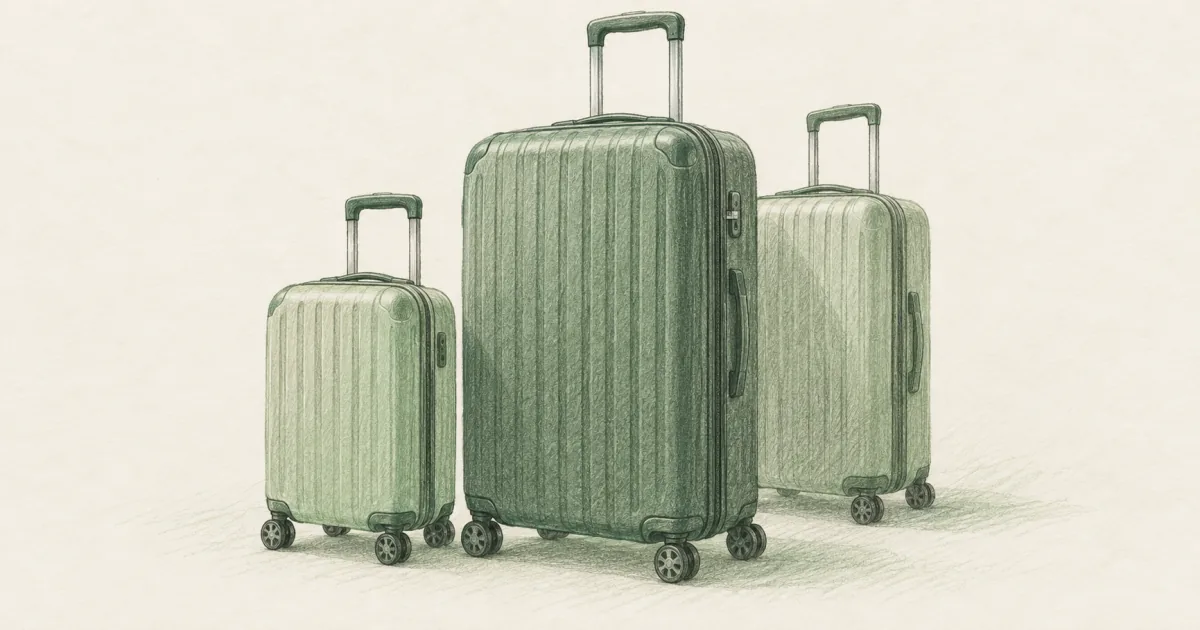
Hardside luggage earns its keep when the shell stays shut and the wheels keep rolling. Start with the Amazon Basics 30" Hardside Large Checked for long trips, then step to a lighter spinner for carry-on routes.
Our picks
The Amazon Basics 30" Hardside Large Checked is the best hardside luggage for most long trips, and for a lot of travelers that is the whole decision. A hardside case earns its keep when you want the shell to hold its shape, keep rain off your clothes, and wipe clean at the hotel. The case does not care that a baggage handler dropped it. A hard panel spreads the impact and springs back, where fabric wears through at the corners.
The tradeoff is weight and pocket space. A hardside case is usually heavier empty than a softside at the same size, and it has no external pockets for a passport or a boarding pass. For checked bags, hardside wins on protection. For carry-on only flying, the decision comes down to how much you value a rigid shell over exterior pockets.
This guide covers the three hardside bags worth buying for most trips, then explains the shell materials and sizing rules so you can match a case to how you actually fly. For the overhead-bin packing side, start with the carry-on packing framework. For the rest of the carry-on lineup, including the capacity and international picks, see the carry-on guide section, best carry-on luggage that holds the most, best carry-on luggage for international travel, and best carry-on luggage for women.
If you want a matched bundle instead of a single bag, that is a different buying job covered in our best luggage set guide.
Quick comparison
Best carry-on value: Amazon Basics 21" Hardside Carry-On
The Amazon Basics 21" is the budget hardside carry-on for travelers who want a rigid shell without paying for polycarbonate. The textured finish hides scuffs, the shell is stiffer than the price suggests, and it fits standard US domestic overhead bins at about 21.7 by 14.8 by 10 inches.
Inside, one half closes with a zippered divider and the other uses elastic cross-straps, with three zippered pockets for small items. There is no exterior pocket, so a passport and a boarding pass ride in the main compartment. The expansion zipper adds room for the return trip, which is the moment most people actually need it.
Who it is for: Carry-on only flyers on domestic routes, students, and anyone who wants hardside protection on a small budget.
Skip if: You fly weight-capped international carriers or you want a built-in TSA lock. The Freeform below is lighter and locks on its own.
Best large checked: Amazon Basics 30" Hardside Large Checked
This is the hardside checked case to buy when capacity matters more than finesse. It measures about 20.7 by 12.6 by 30.7 inches and holds roughly 97 liters when expanded, which is enough for a two to three week trip or a family pack. The shell holds its shape under a full load and wipes clean.
The interior is simple and useful: one half zips closed behind a divider, the other half uses elastic cross-straps, and three zippered pockets catch cables, underwear, and small gear. It sits on four spinner wheels that track straight when the bag is loaded.
Two honest limits. The size tempts you to overpack, and an overpacked 30 inch case can slide past an airline's weight limit and into an overweight fee. And the hard plastic wheels are the first part to show wear on rough pavement.
Who it is for: Two week travelers, families, and anyone who checks one big bag instead of juggling two.
Skip if: You fly weekly and want a case that lasts a decade. Step up to a polycarbonate or polypropylene shell with a longer warranty.
Best premium spinner: Samsonite Freeform Hardside Carry-On
The Freeform is the lighter, better-finished hardside carry-on. A polypropylene shell keeps the weight near softside territory while still giving you molded protection, and the recessed wheels sit flush so they do not catch on bin edges or curbs. A built-in TSA combination lock secures the zippers without a separate padlock, and the expansion zipper adds roughly two inches of depth for the return trip.
The interior is basic by design: one side zips closed behind a divider, the other uses elastic cross-straps. There is no laptop sleeve and no shoe pocket, so pack your own organizers. What you get instead is a 10-year limited warranty and a shell that wipes clean after a rainy tarmac.
The dimensions are the thing to check before you buy. With wheels, the case measures about 23 by 15 by 10 inches, which fits most US domestic bins but is borderline on strict budget and international carriers. Keep the expansion closed when you board those airlines.
The Freeform carry-on is running about 41% off list right now, which is the version of this bag worth grabbing.
Who it is for: Carry-on travelers who lift their own bag, fly often enough to care about empty weight, and want a warranty behind the shell.
Skip if: You mostly fly international budget carriers with a hard size cap, or you want a structured interior with a laptop pocket.
What hardside actually protects (and what it does not)
A hardside shell does one job well: it spreads impact across the whole panel instead of concentrating it at one corner. That matters for electronics, camera gear, bottles, and anything with a screen. The molded panel also keeps rain out and wipes clean at the hotel, which fabric never fully does.
What hardside does not do is flex. A fabric bag squashes into a tight overhead bin or a full car trunk. A hard case either fits or it does not. That is why a hardside carry-on is easier to gate check but harder to squeeze past a strict sizer.
The interior is usually the same across all three price tiers: one zippered divider half, one strapped half, and a few small pockets. If you want compartments, you add packing cubes. Our packing cubes for checked luggage guide covers the sizes that fit a 30 inch case.
ABS vs polypropylene vs polycarbonate
Three shell plastics cover almost every hardside bag on the shelf.
ABS is the budget standard. It is stiff, cheap, and light enough, but it can crack in extreme cold and it does not flex much on impact. The Amazon Basics cases use ABS, and for a few trips a year they hold up fine.
Polypropylene flexes and resists fatigue from repeated bending. It is why the Samsonite Freeform is light and why it takes knocks without cracking. The cost is rigidity: an overpacked polypropylene case bows.
Polycarbonate is the stiff, springy premium plastic. It resists deformation better than the other two and springs back sharply, which is why it costs more. Frequent flyers who check bags weekly get the most value from it.
For most travelers, seal quality and wheel design matter as much as the plastic. A recessed spinner wheel that survives curbs beats a fancy shell with cheap bolt-on casters.
How to choose a hardside size
Measure your trip before you measure a suitcase. A 21 to 22 inch hardside carries a few days of clothes and fits carry-on bins. A 26 inch checked case covers about a week. A 30 inch case is for two to three weeks, a family, or a move.
Then measure the airline, not the marketing. Most US domestic carriers cap carry-on at 22 by 14 by 9 inches. An international or budget carrier may enforce a smaller limit at the gate with a sizer. If you fly those routes, pack the case at home, measure it after packing, and keep the expansion zipper closed.
Weight is the other cap people forget. A large hardside case can hold more than most airlines will let you check, so pack the heavy items low and consider a luggage scale before you leave for the airport.
Final takeaway
Pick the Amazon Basics 30" Hardside Large Checked for the best hardside value on checked trips. Pick the Amazon Basics 21" Hardside Carry-On for domestic carry-on only flying on a budget. Pick the Samsonite Freeform Hardside Carry-On when you want a lighter spinner with a built-in TSA lock and a 10-year warranty.
Whichever you choose, buy the size that matches your longest common trip, not your biggest dream trip. A case that fits the bin and the scale earns its price. To keep the inside organized, pair it with a suitcase organizer set and a set of packing cubes sized to the shell.
Frequently Asked Questions
What is the best hard shell suitcase?
For most travelers, the Amazon Basics 30" Hardside Large Checked is the value pick at roughly 97 liters expanded, and the Samsonite Freeform is the pick when you want a lighter carry-on spinner with a TSA lock. Buy by trip length first: a 21-inch case for carry-on only routes, a 26 to 30 inch case for checked travel.
Do airlines prefer hard or soft luggage?
Airlines do not care either way. Hardside protects what is inside and wipes clean, but softside flexes into tight bins and adds exterior pockets. For overhead-bin flying, a hardside carry-on is fine. For checked bags that get stacked and thrown, hardside holds its shape better than fabric.
Are hardshell suitcases worth it?
Yes, if you pack electronics, camera gear, or anything that hates being crushed. A hard shell spreads impact across the whole panel instead of one dent. The tradeoff is weight, since a hardside case is usually heavier empty than a softside at the same size, and a hard case has no exterior pockets.
Is polycarbonate better than ABS for hardside luggage?
Polycarbonate flexes and springs back, so it resists cracking under heavy loads. ABS is cheaper, stiffer, and can crack in extreme cold. Polypropylene sits in the middle: light and fatigue resistant, but it bows under an overpacked load. The Amazon Basics picks use ABS, and the Samsonite Freeform uses polypropylene.
What size hardside suitcase should I buy?
Match the case to your longest trip. A 21 to 22 inch hardside fits carry-on bins for a few days. A 26 inch checked case covers about a week. A 30 inch case is for two to three week trips or a family. Measure your airline's bin limit before you buy, because an inch over is a gate check.
Can you check a hardside suitcase?
Yes, checked hardside is what these bags are built for. The shell protects the contents through the cargo hold. Add a luggage tag and a TSA-approved lock or cable, and avoid stowing a power bank in a checked case, since spare lithium batteries have to stay in the cabin.
Is a hardside carry-on easier to gate-check?
It is usually harder to gate-check a hardside carry-on because the shell does not squash into a sizer the way fabric does. That is an advantage when you want to keep the bag with you and a problem when you are two inches over a strict airline's limit. Keep the expansion zipper closed when you board budget carriers.
Which hardside luggage brands are the most durable?
The shell material matters more than the badge. Polycarbonate and polypropylene handle repeated flexing better than thin ABS, and recessed spinner wheels survive curbs better than bolt-on casters. Samsonite, Travelpro, and premium brands back their shells with long warranties, but a well-built budget ABS case handles a few trips a year fine.