Travel Organizer Bags: Build a Carry-On That Stays Sorted
Organizers
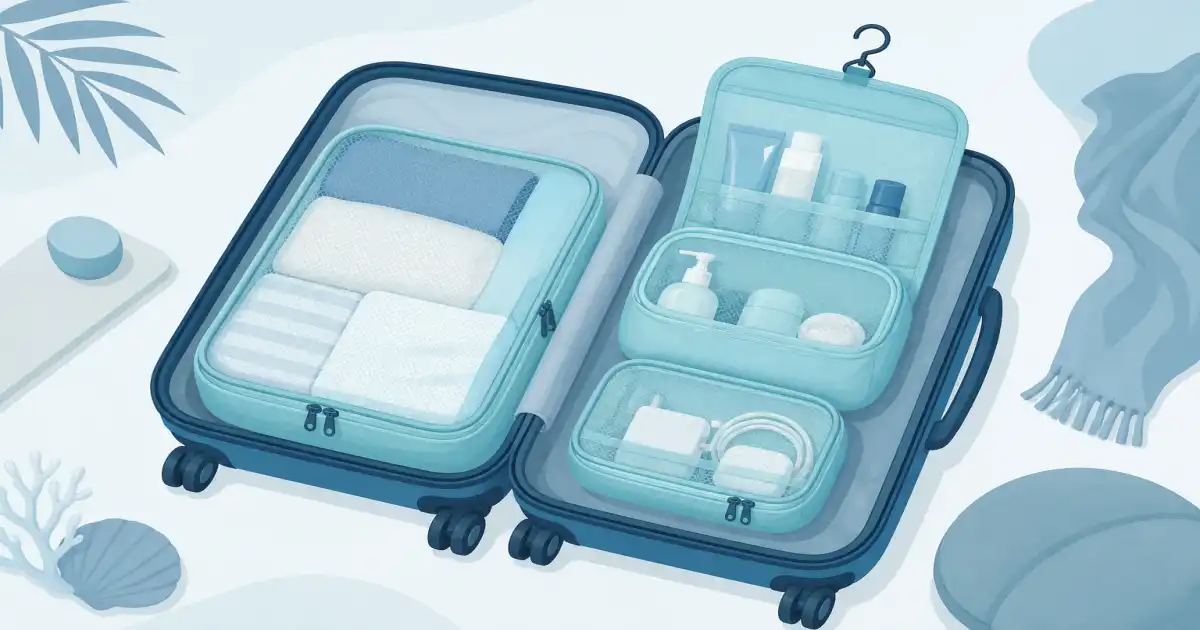
Travel organizer bags work when each one has a job. Use a few clear zones for clothing, toiletries, and tech instead of buying a pile of tiny pouches.
Our picks
Travel organizer bags can make a carry-on much easier to use. They can also turn it into a stack of zippered boxes that wastes space. The difference is not the brand name on the pouch. It is whether you gave each bag one clear job.
For a complete clothing setup, start with our carry-on packing cubes guide. If your main problem is electronics, use our travel cable organizer picks. This guide is about deciding which organizer bags belong together in one carry-on.
For a broader view of the subject, the full organizers section holds all the related posts.
Start with the things that cause the mess
Most travel bags get messy for three reasons. Clothes move when you pull out one shirt. Small items disappear into the bottom. Liquids and cables end up next to things they should not touch.
You do not need a separate organizer for every category. You need enough separation that opening one area does not disturb another. For most travelers, that means a clothing zone, a bathroom zone, and a small-accessories zone.
Clothes are the largest category, so they set the layout. A medium cube for tops and a smaller cube for underwear gives you a simple starting point. Keep shoes and laundry outside those clean-clothes zones. Shoes can sit in their own bag at the base of the suitcase. Dirty laundry can go in a lightweight bag on the return trip.
Pick a clothing bag that fits your actual suitcase
A packing cube should fit your bag, not the product photo. Measure the inside width of your roller or backpack if you are buying a new set. Two medium cubes often use space better than one oversized rectangle.
The Gonex Compression Packing Cubes (4-pack) is a reasonable choice if you want a compact set rather than six or eight pieces. The mesh panels help you find a shirt without opening every zipper.
Compression is useful for tees, casual layers, and underwear. It is less useful for dress shirts or anything with a collar. Those pieces need a flatter fold, not an aggressively packed cube. Read how to pack shirts in a suitcase if you need both casual and business clothes in the same bag.
Give toiletries their own exit route
Toiletries should not be buried inside a clothes cube. On a flight day, your liquids need to come out quickly for screening. At the hotel, damp items and bottles should stay away from clean fabric.
Use a toiletry bag for dry bathroom items, then keep carry-on liquids in an accessible clear pouch. A hanging bag can be helpful in hotels with small counters, but it is not required. A compact flat pouch is easier to pack when you only bring a toothbrush, medicine, and a few small bottles.
The key is access. Put the liquids pouch in an outer pocket or suitcase lid. Keep the rest of the toiletry bag nearby, not underneath shoes or a heavy clothing cube.
Put chargers in one pouch, not five pockets
Chargers are easy to lose because they are small, dark, and usually packed at the last minute. A tech pouch is worth carrying when you have a laptop brick, power bank, earbuds, adapters, or more than two cables.
The tomtoc Electronic Organizer Travel Case has two compartments, so a charging brick does not press into your cables. It is larger than a simple cord wallet, so skip it if you only pack a phone cable.
Keep the pouch near the top of a personal item. You may need it at the gate, under a plane seat, or in a hotel room before unpacking the rest of your bag.
A simple carry-on layout
Use the bottom or wheel end for shoes and the densest clothing cube. Put tops and lighter layers above them. Keep the toiletry and tech organizers in the lid pocket, front pocket, or top of a backpack where you can reach them quickly.
Leave one small flexible area for a book, snacks, a rain layer, or things you pick up during the trip. Packing every inch into organizer bags means you have nowhere to put a sweater after airport security.
When you return home, turn one empty cube or soft bag into the dirty-laundry zone. Do not compress wet clothes. Let swimwear dry first, then separate it from clean items.
Common travel organizer bag mistakes
Buying a matching set of ten bags is the easiest mistake. It looks organized before the trip, but it adds weight and makes every item harder to retrieve. Start with three core zones and add one only when a recurring problem appears.
Another mistake is using structured organizers in a soft backpack. Hard corners fight the bag shape and create pressure against your back. Soft-sided pouches and slim cubes work better in backpacks.
Finally, do not let organizer bags replace editing your packing list. A good bag layout helps you find things. It does not make six pairs of shoes sensible in a carry-on.
Frequently Asked Questions
How many travel organizer bags do I need?
Most carry-ons work with three to five: clothes, underwear, toiletries, tech, and optionally dirty laundry.
Are packing cubes worth it for a short trip?
Yes when you want to open the bag without unpacking it. One medium cube and one small cube are usually enough for a weekend.
Should I use a separate bag for chargers?
Use one if you carry a laptop charger, adapters, batteries, or several cables. A single charging cable can live in a small pocket.
Do organizer bags take up too much space?
They can if you buy rigid, oversized sets. Choose soft bags that fit your actual bag dimensions and leave some empty space.
What size clothing organizer fits a carry-on suitcase?
Measure the inside width of your roller or backpack, then choose medium cubes. Two medium cubes often use space better than one oversized rectangle.
How do I keep dirty laundry separate without another bag?
Turn one empty cube or soft bag into the laundry zone on the return trip. Let wet clothes dry first, and never compress damp items with clean clothes.