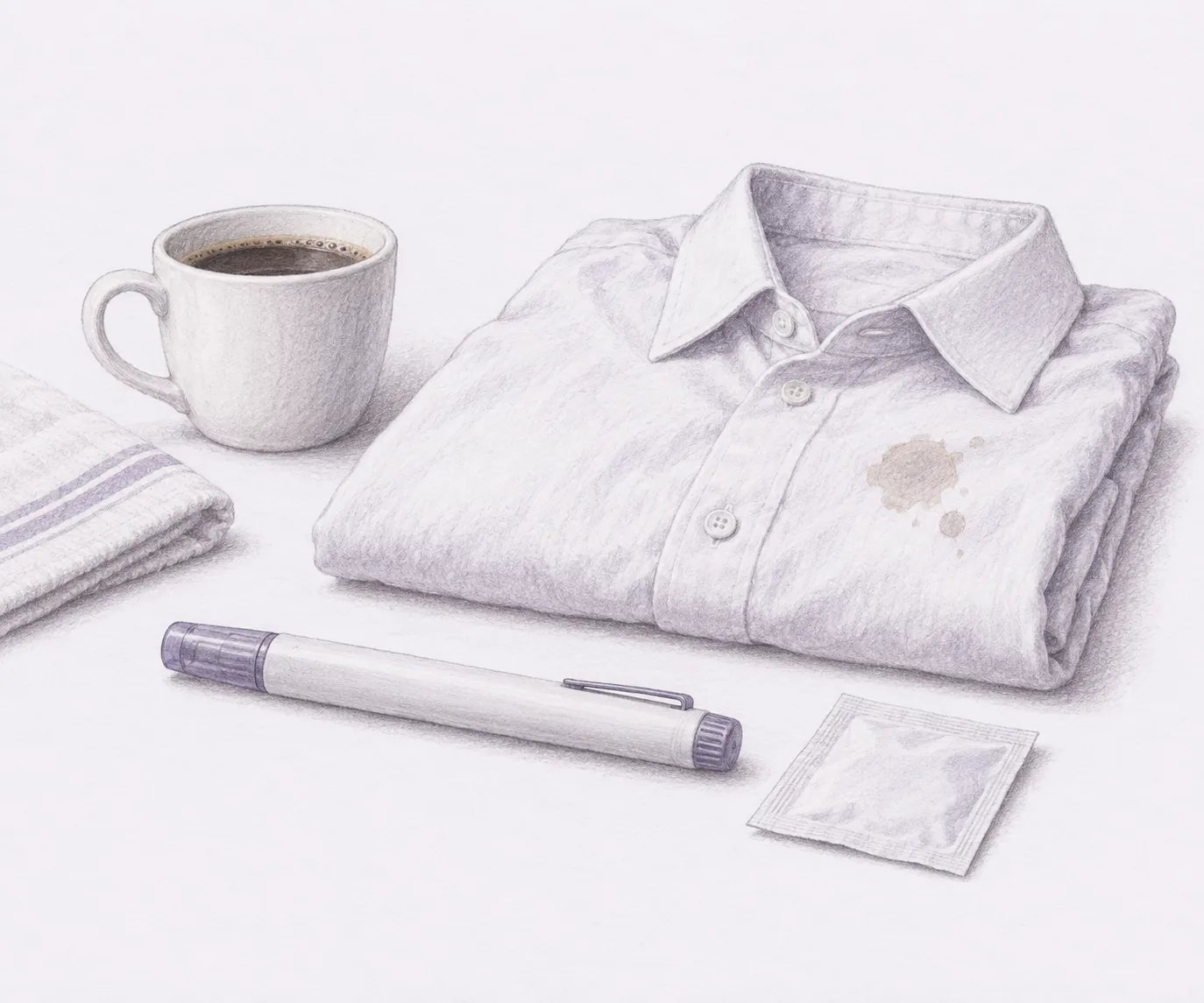
Best Travel Stain Remover (2026): Pens, Wipes, and Sprays for the Road
Organizers
A travel stain remover saves a shirt when you are nowhere near a washing machine. Start with the Tide To Go pen, keep Shout Wipes for delicate fabric, and use OxiClean for set-in marks.
Our picks
A stain on a trip is a timing problem. The shirt is not dirty enough to wash, but it is too dirty to wear to dinner, and the hotel sink is not a real fix. The right tool depends on the clock: a pen or a wipe for the moment the spill happens, and a pretreat spray for the stain that will sit until you get home.
Most on-the-go stains are food and drink, which is exactly what a pen is built for. The hard cases, like ink, grease, and blood, are the ones a pen cannot fix, so it helps to know which product to reach for. A small kit of one pen and one wipe packet covers almost everything a normal trip throws at a shirt.
Keep the stain kit with the rest of the small gear in the organizers section, next to the laundry bag for worn clothes and the travel wet bag for damp items. The cable organizer pillar covers the pouch that keeps a pen from rolling loose in your bag.
Quick comparison
Top pick: Tide To Go Instant Stain Remover Pen
The Tide To Go pen is the default because it treats the most common stain at the moment it happens. It is built for fresh food and drink spills: coffee, tea, wine, ketchup, BBQ sauce, grape juice, and chocolate syrup. The solution is a detergent blend with hydrogen peroxide, and it dries without a rinse, which is what makes it usable at a table or in a car.
It is also genuinely travel-friendly. A pen is not a liquid, so it is not part of the TSA liquids count, and the three-pack means you can keep one in a carry-on, one in a car, and one at a desk. That redundancy is the point, because the pen you left at home fixes nothing.
The honest limit is the stain type. It does not work well on ink, grease, blood, or grass, and it does almost nothing to a stain that has already set. Test it on an inside seam first if the garment is white, because a few reviewers report a faint mark on white fabric after treating a spill.
Skip it for ink, grease, or blood. Pick it as the everyday pen for food and drink spills.
Best wipes: Shout Wipes, Wipe and Go
Shout Wipes cover the stains a pen handles poorly. Each wipe is individually wrapped, so it can sit in a pocket or a glove box for a year and still be ready. The cloth is textured on both sides to lift makeup, orange juice, blood, and red wine, and no washing is required after you use it.
The wipe format is the advantage on delicate fabric. Blotting with a damp cloth is gentler than pressing a pen tip into the weave, and it spreads less. Blot from the outside of the stain toward the center, using a fresh part of the wipe as it picks up color.
The limit is capacity. One wipe handles one small spill, so a bigger mess needs two packets. They also dry out over time, so rotate the one in your bag each season rather than trusting a packet that has been in there for years.
Skip them for a large spill that needs a pretreat. Pick them for makeup, wine, and juice on fabric you do not want to scrub.
Best spray: OxiClean Max Force Laundry Stain Treater
OxiClean Max Force is the pick for the stain that will wait. It is a pretreat spray, which means you apply it and then wash the item later, up to seven days after. That timing fits a trip where laundry happens at the end rather than the moment of the spill.
It handles the set-in and dried stains that a pen cannot: berries, coffee, wine, chocolate, ketchup, blood, ink, and washable paint. The formula is color-safe with no chlorine bleach, brighteners, dyes, or phosphates, so it is gentle on colored and delicate garments. The two-pack of 2 oz bottles fits a TSA liquids bag.
The tradeoff is that it is not an instant fix. You cannot spray it on and walk out the door, because the item needs a wash to finish the job. It is the right tool for a hotel-room pretreat, not a dinner-rescue pen.
Skip it if you need a fix in the next five minutes. Pick it for set-in stains and a wash day that is days away.
How to treat a stain on the road
Act fast, because time is what turns a spill into a stain. Blot the excess with a napkin first, then work from the outside of the stain toward the center so you do not spread it. Use a pen for a food or drink spill, or a wipe for makeup and wine on delicate fabric.
Do not rub hard. Hard rubbing pushes the stain deeper into the fibers and can rough up the fabric. A gentle press or blot lifts more. If the item is white or delicate, test on an inside seam before you treat the visible part.
For a stain that will sit, spray a pretreat like OxiClean and let it work until laundry day. Keep the treated item separate from clean clothes, which is what the laundry bag is for. Wash it as soon as you can, because even a pretreat has a limit.
Common mistakes
Waiting until the stain dries. A fresh spill is easy. A dried stain is a project. Treat it in the first few minutes.
Rubbing instead of blotting. Hard rubbing spreads the stain and damages the fabric. Blot from the outside in.
Using a pen on ink or grease. A food-and-drink pen does nothing for ink, grease, blood, or grass. Use a pretreat spray for those.
Packing a spray in a carry-on without checking the size. A spray must be 3.4 ounces or less and fit your liquids bag. A pen has no such limit.
Leaving a wipe packet in the bag for years. Wipes dry out. Rotate the one in your bag each season.
Forgetting to wash a pretreated item. A spray needs a wash to finish. Do not let a treated shirt sit for weeks.
Final takeaway
The Tide To Go pen is the best travel stain remover for the spills that happen on the go. Keep Shout Wipes for makeup and delicate fabric, and use OxiClean Max Force for set-in stains before a wash day. Pack one pen and one wipe packet and you can handle almost any spill a trip produces.
Then finish the job with laundry detergent sheets for the wash and a laundry bag for worn clothes, and keep the small kit together with the organizers section.
Frequently Asked Questions
What is the best travel stain remover?
The Tide To Go pen is the best travel stain remover for most people. It treats fresh food and drink stains in seconds and dries without a rinse. Keep Shout Wipes for delicate fabric and makeup, and OxiClean Max Force for stains that will wait until you do laundry.
Do stain remover pens actually work?
Yes, on fresh food and drink stains. The Tide To Go pen is built for coffee, wine, ketchup, and juice, and it works best when you treat the stain right away. It does not work well on ink, grease, blood, or grass, so those need a different product.
Can I bring a stain remover pen in a carry-on?
Yes. A pen is a solid stick, not a liquid, so it is not subject to the TSA liquids rule. A spray bottle needs to be 3.4 ounces or less and fit in your liquids bag, which is why travel-sized sprays exist.
How do I remove a stain without a washing machine?
Blot the excess, then work a pen or wipe into the stain from the outside in. Let it dry, and wash the item when you can. For a set-in stain, spray a pretreater and leave it until laundry day, then wash as normal.
Does stain remover work on set-in stains?
Pens and wipes work best on fresh stains. For set-in or dried marks, use a pretreat spray like OxiClean Max Force, which is made to sit on the fabric until you wash it, up to seven days later.
What stains can a travel stain remover not fix?
Ink, grease, blood, and grass are the common ones that a pen handles poorly. Blood needs cold water, grease needs a degreaser, and ink often needs alcohol. A pretreat spray covers more of these than a pen does.
Should I use a stain remover or laundry detergent sheets?
They do different jobs. A stain remover treats one spot before it sets. Laundry detergent sheets wash a whole load in a sink or a machine. For a trip, pack both: a pen for the moment and sheets for the wash day.
How do I keep a stain from spreading?
Blot from the outside of the stain toward the center so you do not push it outward, and use a fresh part of the wipe as you go. Do not rub hard, which drives the stain deeper into the fibers.