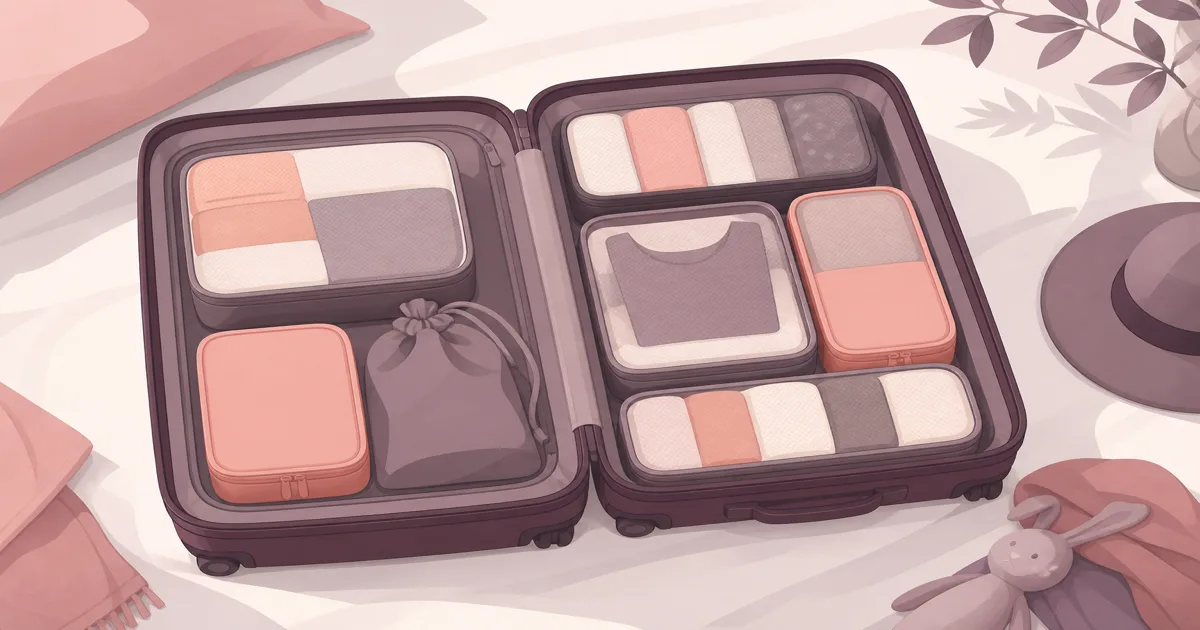
Best Packing Cubes for Family Travel: Separate Everyone Without Losing the Bag
Packing cubes
Family packing cubes work when each person gets a clear color and size system. A mixed-size set keeps daily outfits and the growing laundry pile separate.
Our picks
Family travel gets messy when everyone’s clothes live in the same suitcase without any boundaries. A pair of socks disappears, a child’s pajamas end up under an adult sweater, and packing the return flight takes twice as long as it needs to. Packing cubes do not make the bag smaller by magic. They make it clear whose things are where.
This guide focuses on shared family bags. For kid-sized day cubes and outfit pouches, see best packing cubes for kids. For the trip itself, use our family vacation packing list. If you are deciding between cube styles, start with best travel packing cubes.
A useful family set has more than matching colors. It needs a mix of sizes, zippers that can handle a full cube, and enough separate pieces that each traveler has a simple home for their clothes. A set of six or more is usually easier to divide than three giant organizers.
Think about access before compression. A big cube can hold several outfits, but it is frustrating if you have to unpack it to find pajamas for one child. Small and medium cubes make more sense for things you need every day. Save large cubes for shared layers, beach towels, or bulky cold-weather clothes.
Mesh panels are helpful for seeing the contents, especially when a partner is looking for a child’s shirt while you are checking into a hotel. Solid panels are better for dirty laundry. There is no need to make every cube do every job.
For a wider starting point, the full packing cubes section rounds up the sibling articles.
A practical choice for shared suitcases
The Veken Compression Packing Cubes are a practical family option because the set includes six cubes across several sizes. Small, medium, large, and extra-large pieces give you room to build zones instead of forcing every item into one format.
Use the medium cubes for individual daily clothes, the small cube for underwear or swimwear, and a large cube for shared layers. Keep the extra-large one for a parent’s clothes or a dedicated laundry zone at the end of the trip. The compression zipper is useful for dry sweatshirts and jackets, but do not zip it tight around everything.
One set is enough for a parent and one child on a short trip. A family of four will often be happier with two sets, especially if everyone shares a checked suitcase. The second set costs less than the time spent digging through a single oversized cube every morning.
Color-coded cubes for a shared suitcase
Best for: Families who want each traveler to have their own color and their own cube.
The Dot&Dot Large Packing Cubes solve the shared-suitcase problem with color instead of labels. Every cube is the same large size, which suits a day of clothes for a child or a stack of shared layers, and each one is a different color, so a kid knows their things are in the blue cube and nobody has to ask. The translucent fabric and mesh top let you check that a cube is packed without opening it, which helps when you are repacking the morning you fly home.
The trade is the single size. There is no small cube for socks, swimwear, or underwear, so pair this set with a small pouch for those. If your family packs by a size ladder rather than by color, the Veken set above gives you more options.
Skip if: Your layout depends on small cubes for socks, swimwear, or underwear.
Buy if: You want one color per person and a large cube that holds a full day of clothes.
Pick a sorting method before you start packing
There are two good ways to organize a family suitcase. The first is one color per person. This works well when each person has several cube sizes. A child knows their clothes are in blue cubes, while another person uses green. It is fast and easy to reset.
The second method is one cube by clothing type. Use one for pajamas, one for swimwear, one for socks, and one for day outfits. This works best when adults are doing all of the unpacking and repacking. It also makes sense for a short beach trip, where several people will reach for the same category at once.
Do not combine both systems unless you have a clear reason. A suitcase that is partly sorted by person and partly by category is hard to follow. Keep the rules simple enough that everyone can help pack at the end of the trip.
Pack outfits around the trip, not the calendar
Families often overpack because they count one completely new outfit for every day. Start with a smaller group of clothes that can mix, then add specific pieces for swimming, dinners, weather, or activities. Put the items you will use first at the top of their cube.
For young children, packing one day’s outfit together can be useful. Put underwear, shirt, shorts or pants, and socks in a small cube or zip pouch. It makes mornings faster and lets another adult help without asking where everything is.
For older children and adults, group by type instead. One cube for tops and another for bottoms makes it easier to repeat a favorite item or adjust for weather. Keep a light layer accessible rather than compressing it beneath the whole bag.
Add a laundry plan from day one
Dirty clothes need their own place before the first item is worn. Reserve an empty cube or bring a separate bag. As clean cubes get emptier, move worn clothes into the laundry zone rather than filling each person’s cube with a mix of clean and dirty items.
Do not put damp swimwear into the same cube as regular laundry. Let it dry first, or use a separate water-resistant pouch until you can hang it. Our guide on how to store dirty clothes when traveling explains where to place that zone in a shared suitcase.
On the last night, consolidate only dry laundry. The return flight is easier when you know one cube contains worn clothes and the rest contain clean items or souvenirs. You can unpack with one laundry load instead of sorting every cube on the bedroom floor.
Common mistakes
- Buying only two giant cubes for four people
- Packing by person on the way out, then mixing everyone’s laundry together
- Using compression for pajamas and next-day outfits that need quick access
- Giving children cubes with no color or label they can recognize
- Packing wet swimwear with clean clothes to save space
- Filling every cube completely before leaving room for the return trip
Final takeaway
The best packing cubes for family travel give every person a clear section and leave one zone open for laundry. Choose a mixed-size set, color-code it or sort by clothing type, and keep tomorrow’s essentials easy to reach. If you would rather assign a color per person than manage a size ladder, the Dot&Dot Large 5pc gives every traveler their own see-through cube. A shared suitcase will never be perfectly tidy, but it does not need to become one big pile either.
Frequently Asked Questions
How many packing cubes does a family need?
For one shared suitcase, plan on two or three cubes per person plus one shared laundry zone. Use fewer, larger cubes for toddlers and more small cubes for adults with separate outfits.
Should each child get a different cube color?
Yes. Color is faster than reading labels when you are packing in a hotel room or helping a child get dressed.
Are compression cubes good for family travel?
They help with soft, bulky layers, but do not use them for every item. Keep pajamas and next-day outfits in ordinary cubes that open quickly.
Can one packing cube hold a complete outfit?
It can, especially for children. Packing one outfit per cube is useful for short trips, but it may use more space than grouping similar items together.
What size packing cubes work best for kids?
Use small and medium cubes for daily outfits, socks, and pajamas, and save large cubes for shared layers or bulky cold-weather clothes. A color each child can spot is faster than reading a label.
How do I keep dirty clothes separate on a family trip?
Reserve an empty cube or bring a separate bag before the first item is worn. Let damp swimwear dry first, or use a separate water-resistant pouch until you can hang it.