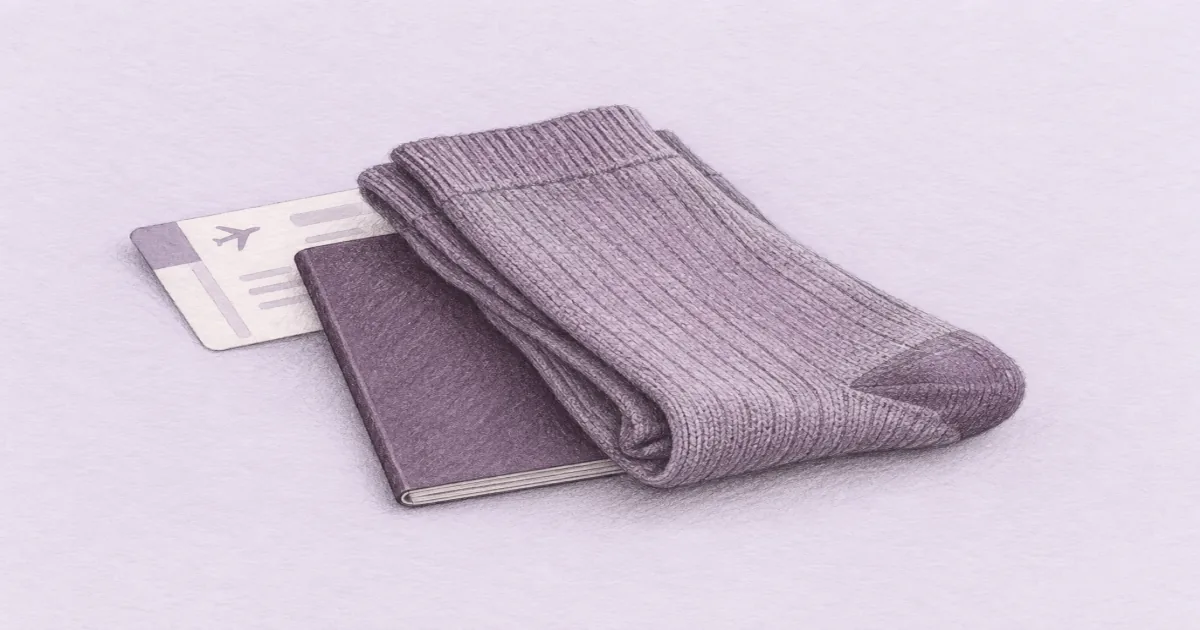
Best Compression Socks for Flying (2026): Socks That Beat Long-Haul Swelling
Organizers
Compression socks reduce swelling and leg fatigue on long flights by keeping blood moving when you sit for hours. Start with a comfortable 15-20 mmHg pair for the trip, then step up to 20-30 mmHg if you want firmer support.
Our picks
Long-haul flying is mostly sitting. Sitting at altitude slows the blood that normally pumps back up from your feet, which causes swelling and a small but real increase in DVT risk. Graduated compression socks fix that by squeezing tightest at the ankle and easing up the calf, so the squeeze keeps blood moving instead of pooling.
This guide focuses on the buying decision: which compression level, which size, which fabric, and which brands are worth the price. Pair the socks with carry-on packing cubes so the rest of your bag stays flat. For broader organizer guides and flight-comfort picks like travel pillows, start with those.
Compression socks fail most often when the compression level is wrong (too low to help, too high to wear comfortably), when the size is wrong (cuts off at the top band), or when the fabric is too warm for summer flights. Buy 15-20 mmHg graduated compression in your true calf size for everyday flying, and step up to 20-30 mmHg only when you want firmer support. Skip anything above 30 mmHg unless a doctor told you to wear it.
Quick comparison
Best for most flyers: SB SOX Lite Compression Socks for Flying
The SB SOX Lite Compression Socks for Flying are the best compression socks for flying for most travelers. The 15-20 mmHg graduated compression is the everyday range most flyers start with, the lightweight nylon-spandex blend stays breathable through a full day of sitting and walking, and the calf-based sizing keeps the squeeze firmest where it matters.
Rated 4.6 stars across more than 2,500 US reviews, this is one of the best-reviewed compression socks on Amazon, and the listing carries an Amazon's Choice badge. At $14.95 a pair you can keep one in your carry-on and one at home without thinking about it. The graduated build is tightest at the ankle and eases up the calf, and the low-profile fabric fits inside most shoes without bunching.
This is the pick if you fly a few times a year, want real circulation support without a medical-grade squeeze, and would rather not spend ten minutes wrestling a sock onto your foot in a hotel room. The trade-off is the lighter pressure. If you fly ultra-long-haul or your doctor wants something firmer, the 20-30 mmHg Physix Gear below gives you more.
Skip if: You want the firmest squeeze for a 14-hour flight or you have larger calves. Step up to 20-30 mmHg instead.
Who it is for: Occasional and frequent flyers, travelers who find 20-30 mmHg too firm, and anyone who wants a comfortable everyday compression sock for travel days.
Pros
- 15-20 mmHg graduated compression, the everyday range for most flyers
- Lightweight, breathable nylon-spandex that wears well all day
- Easy to pull on and off compared with firmer socks
- Calf-based sizing from 11 to 24 inches, so the fit is real
Cons
- Lighter squeeze than a 20-30 mmHg sock
- The S/M to L/XL jump is a big one, so measure your calf before ordering
Check the SB SOX Lite Compression Socks on Amazon
Best firmer support: Physix Gear Compression Socks 20-30 mmHg
The Physix Gear Compression Socks 20-30 mmHg are the best compression socks for flying when you want a firmer squeeze than the everyday range. The 20-30 mmHg graduated compression suits very long flights, larger calves, or a doctor's recommendation, and the nylon-spandex blend holds its pressure through dozens of washings.
This is the pick if you fly long-haul regularly, want more support than 15-20 mmHg gives, and value price per pair. The trade-off is the top band. It runs tighter than the foot, which keeps the sock from slipping but can feel constrictive high on the calf. If that bothers you, the 15-20 mmHg SB SOX above is easier to wear.
Skip if: You want the most comfortable all-day sock. Go with the 15-20 mmHg pick instead.
Who it is for: Long-haul flyers, travelers with larger calves, and anyone who wants firmer support on flights over 8 hours.
Pros
- 20-30 mmHg graduated compression for firmer support
- Sub-$20 price lets you keep a spare pair in your carry-on
- Reinforced heel and toe survive repeated washings
Cons
- The top band runs tighter than the foot and can feel constrictive
- Tumble drying fades the compression, so air dry it
Check the Physix Gear Compression Socks on Amazon
Best merino upgrade: Sockwell Women's Elevation Firm
The Sockwell Women's Elevation Firm Graduated Compression Socks are the best compression socks for flying when you want a merino-wool upgrade. The merino-wool blend breathes on warm flights, resists odor across multi-day trips, and the 20-30 mmHg graduated compression matches the firmer range.
Made in the USA with US-sourced merino wool. The over-the-calf fit is comfortable for tall travelers, and the seamless toe closure avoids the pressure point most compression socks leave at the toe seam. The trade-off is the price, about double the synthetic picks.
This is the pick if you fly long-haul regularly, run hot on flights, and want a sock that lasts longer than three years of weekly wear. Sockwell holds compression better than the cheaper synthetic pairs, and the merino blend does not develop the chemical smell that nylon-spandex socks pick up after a dozen flights.
Skip if: You want a budget pair to keep in every bag. Sockwell at about $33 a pair is the upgrade, not the spare.
Who it is for: Long-haul flyers, travelers whose feet run hot, and anyone who wants a compression sock that lasts longer than a few years.
Pros
- Merino wool blend breathes on warm flights
- 20-30 mmHg graduated compression matches the firmer range
- Made in the USA with US-sourced merino
- Odor-resistant across multi-day trips
Cons
- About double the price of the synthetic picks
- Merino requires gentler washing to keep compression
- Over-the-calf height is tall for shorter travelers
Check the Sockwell Women's Elevation on Amazon
Compression levels explained
Most travelers should start at 15-20 mmHg. It is the everyday range for flying: enough graduated pressure to keep blood moving on a long flight, but comfortable enough to wear from the taxi to the hotel. Step up to 20-30 mmHg if you fly very long haul, have larger calves, or a doctor recommended firmer support. Anything above 30 mmHg is medical-grade compression and should only be used on a doctor's advice.
Graduated compression is the important word. It means the sock is tightest at the ankle and eases up the calf. The pressure gradient is what keeps blood moving. Uniform compression does not work the same way and can cut off circulation at the top band if the size is wrong.
Size matters more than level. A 20-30 mmHg sock in the wrong size is worse than a 15-20 mmHg sock in the right size. If the top band digs into your skin or your toes tingle, size up. The squeeze still works at the right ankle pressure; you do not lose benefit by wearing a slightly larger sock.
When to put them on and how long to wear them
Put them on before you leave for the airport, not at the gate. The squeeze should be in place during taxi and takeoff, when cabin pressure changes most. Keep them on for at least 2 hours after landing, longer if you have a long connection.
For flights over 8 hours, change into a fresh pair after landing if you have a connection. The moisture from a long flight reduces the squeeze slightly. A second pair gets you back to full compression for the next leg.
Mistakes to avoid
Buying too high a compression level. 30-40 mmHg feels great on day one and cuts off your circulation by hour three. Start at 15-20 or 20-30. Step up only on a doctor's advice.
Buying the wrong size. Most brands print a calf-circumference chart on the listing. Measure your calf at the widest point. If you are between sizes, size up rather than down.
Wearing them on both legs. Most travelers only need them on flights over 4 hours. For shorter routes, the bulk and warmth are not worth the small swelling benefit.
Skipping them because they feel tight at first. The first 10 minutes of compression socks feel restrictive. After that, the squeeze should be a stable, supportive pressure. If it never eases up, the size is wrong.
Who should not wear compression socks
Anyone with a circulatory condition, vein disease, or DVT history should talk to a doctor before wearing compression socks. Pregnant travelers should also ask a clinician what level is right for them. Travelers with open leg wounds or skin infections should skip compression until the skin heals.
Care tips that extend sock life
Wash compression socks after every flight. Sweat, salt, and body oils break down the spandex that gives the sock its squeeze. Wash in cold water on gentle and hang dry. Hot water and machine drying kill compression socks faster than wear does.
Replace compression socks every 6 to 12 months if you fly weekly. The squeeze fades before the sock looks worn. If you fly a few times a year, every 2 to 3 years is fine.
Bottom line
The best compression socks for flying for most travelers are the SB SOX Lite 15-20 mmHg, the everyday range most flyers start with, easy to pull on, and breathable enough for a full travel day. Step up to the Physix Gear 20-30 mmHg if you want firmer support for very long flights, or the Sockwell Women's Elevation for a merino-wool upgrade that breathes better on long-haul flights and lasts longer than three years. Skip anything above 30 mmHg unless a doctor told you to wear it.
Frequently Asked Questions
What are the best compression socks for flight travel?
For most travelers, a 15-20 mmHg graduated compression sock in a lightweight synthetic blend hits the right balance between support and comfort. The SB SOX Lite pair holds 4.6 stars across more than 2,500 US reviews and stays comfortable enough to wear from the airport to the hotel.
Is 20-30 mmHg compression socks too much for flying?
For most healthy adults, no. 15-20 mmHg is the everyday range that most flyers start with. 20-30 mmHg is firmer, and some travelers step up to it for very long flights or if they have larger calves. Anything above 30 mmHg should only be used on a doctor's advice. If you have a circulatory condition, DVT history, or are pregnant, ask a clinician before buying.
Is it good to wear compression socks on an airplane?
Yes, especially on flights over 4 hours. Long sitting at altitude slows blood return from the feet, which causes swelling and increases DVT risk. Graduated compression socks keep blood moving by squeezing tightest at the ankle and easing up the calf. Most healthy adults can wear 15-20 or 20-30 mmHg without consulting a doctor.
How long before a flight do you put compression socks on?
Put them on before you leave for the airport, not at the gate. You want them in place during the taxi and takeoff, when cabin pressure changes most. Keep them on for at least 2 hours after landing.
Are compression socks enough to prevent DVT on a flight?
No. Compression socks reduce swelling and lower the rate of symptomless DVT, but they do not eliminate risk. Move every 1 to 2 hours during the flight, drink water, and skip the alcohol. Travelers with a personal or family history of blood clots should talk to a doctor before any long-haul trip.
Do compression socks help on short flights?
Less. Under 4 hours, the swelling is mild and the benefit is mostly comfort. If you have larger calves, are pregnant, or have a vein condition, you may still want them on short flights. For most flyers on 2 to 3 hour routes, the socks add bulk without much benefit.
How tight should compression socks feel on a flight?
Snug but not painful. The squeeze should be firmest at the ankle and ease up the calf. If the top band digs into your skin or your toes tingle, the size is wrong. Size up one notch and try again.
Should I size up compression socks if I have larger calves?
Yes. Most brands print a calf-circumference chart on the listing. If you are between sizes, size up rather than down. The squeeze still works at the right ankle pressure; you do not lose benefit by wearing a slightly larger sock.