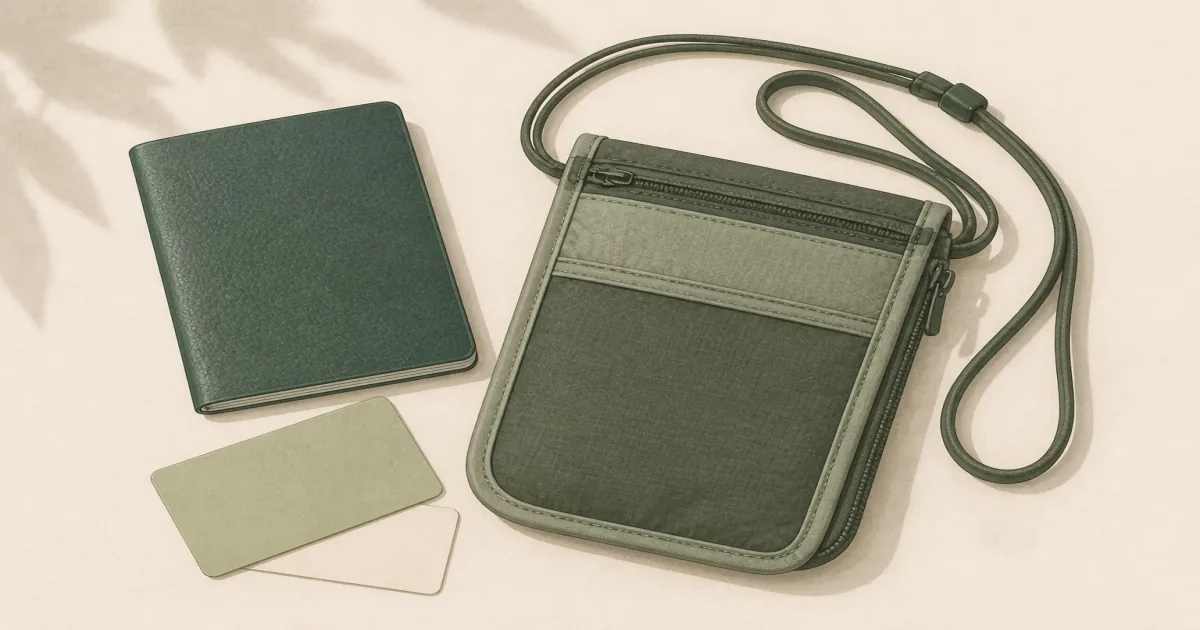
Best Neck Wallet for Travel (2026): Flat RFID Pouches That Stay Hidden
Organizers
The best neck wallet for travel hangs flat under a shirt, holds a passport and spare cards, and does not bounce when you walk. Start with HERO for most trips.
Our picks
A neck wallet is a flat RFID pouch on a cord that hangs under your shirt. It is for the passport you are not waving at every cafe, spare cards, and a small emergency float. It is not a day wallet, and it is not the same job as a waist money belt, a grab-ready document organizer, or a slim RFID passport holder you hand over at a desk.
If your current “security system” is a back pocket in a busy market, a neck pouch helps. If you already keep a slim day wallet in a zippered front pocket and deep storage on a money belt, you may only need a neck wallet when waist straps bother you. Browse more packing organizers when you are building the full kit, and keep the rest of your personal item packing list lean so the pouch is not carrying your whole life.
Neck wallet vs money belt vs document pouch
Most frequent flyers end up with two layers: a grab pouch in the personal item, plus one body-worn deep stash. The deep stash can be a neck wallet or a money belt. Do not buy both unless you have already tested which one you will wear.
Features that matter
Cord and length. You need enough adjustability to sit the pouch mid-chest under a shirt without choking you when you sit. Elastic cords feel softer; fixed cords bounce less when shortened correctly.
Pocket layout. Look for a passport-sized sleeve plus a card slot. Extra mesh pockets are fine until they invite you to pack a phone, pens, and coins. Thin wins.
RFID lining. Useful, not magical. Zip closed and keep the pouch under clothes either way.
Fabric. Soft nylon or similar synthetics that do not print a hard outline through a t-shirt. Stiff leather looks premium in photos and announces itself under thin summer shirts.
Hardware. Plastic zippers and cord locks usually clear checkpoints more quietly than heavy metal clusters.
How to wear it without advertising it
Put the pouch on against bare skin or over a thin undershirt, then cover with your outer shirt. Shorten the cord until the pouch sits flat on your sternum, not swinging near your stomach. When you bend to pick up a bag, the pouch should stay put.
Do not wear it outside your shirt in transit hubs. A visible neck pouch is a labeled target. Do not combine a stuffed neck wallet with a bulky money belt on the same day unless you enjoy feeling like a walking filing cabinet.
At hotels, empty the passport into the safe when you will be out swimming or dancing. Take the pouch empty or with a tiny cash float only. Fabric lasts longer when it is not soaked in sweat all week.
Trip-type picks
City sightseeing and transit: HERO for most people. Slim, RFID, enough room for the passport stack.
Hot weather walkers who hate waistbands: Travelon undergarment style sits closer and prints less under light shirts.
One short international hop on a budget: Likesing covers the RFID passport stash without a premium price.
Europe packing lists and longer multi-city routes: keep the neck wallet for deep storage and use a document organizer for trains and hotels. See the Europe packing list and international travel packing list for the rest of the kit.
On cruise embarkation days or bus tours with frequent bag checks, a neck wallet can be faster than digging for a waist belt under layers. Still empty it into a cabin safe when you do not need the passport on your body. The pouch is a transit tool, not a permanent necklace.
If you share travel with kids, do not hang a family-size organizer under one adult shirt and call it done. Give each adult a slim pouch or use a money belt for the shared backup cash and keep child documents in the grab organizer.
Common mistakes
Buying a family-size organizer and hanging it under a shirt like a bib. Overloading with a phone and a brick of coins. Wearing the pouch outside clothes. Treating RFID as a force field. Skipping a day wallet so every coffee purchase requires an under-shirt unzip.
Another mistake: using the neck wallet as your only document system at the airport desk. Agents need a grab pouch. Keep deep storage deep, and keep the active passport easy to hand over.
Our neck wallet picks
The HERO Neck Wallet - RFID Blocking Passport Holder (Black) is the default. It stays flat for most body types, and owners report it holds up over multi-day wear.
Choose the Travelon RFID Blocking Undergarment Neck Pouch when concealment under thin shirts is the priority. Choose the Likesing Travel Neck Wallet RFID Passport Holder (Grey) when you want a cheaper RFID stash for a single trip.
Pair any of these with a normal day wallet and, when desk access matters, a document organizer. More packing guides live on the Packneatly blog and homepage.
Final takeaway
The best neck wallet for travel is the thinnest RFID pouch you will actually wear under a shirt. Keep the load light, shorten the cord, and leave cafe cards in a normal pocket. Use a money belt instead if waist storage feels more natural, and keep a document organizer for the moments you need to hand papers over quickly.
Frequently Asked Questions
What is a neck wallet for travel?
A flat pouch on an adjustable cord that hangs under your clothes. It holds a passport, spare cards, and emergency cash so those items are not in an outer pocket.
Neck wallet or money belt?
A money belt sits on your waist and moves with your hips. A neck wallet hangs on your chest. Pick the belt for long walking days in heat; pick the neck pouch if you hate anything around the waist.
Do I still need a document organizer?
Yes for desk moments. A travel document organizer is what you hand to an agent. The neck wallet is deep storage, not the grab pouch for every checkpoint.
Is RFID blocking required?
It is common and cheap on modern pouches. Treat it as a bonus. Physical pickpocket risk still matters more than wireless skimming for most travelers.
Will TSA make me remove a neck wallet?
Usually not if it is plastic hardware and sits flat. A stuffed phone or metal zipper cluster can draw a check. Move dense electronics to a tray if asked.
What should go in a neck wallet?
Passport, one or two spare cards, a small cash float, and maybe a hotel key. Keep the card you tap at cafes in a normal front pocket so you are not fishing under your shirt at every counter.
Can I wear a neck wallet to the beach?
Only if it is empty of the passport you left in the hotel safe. Salt and sand wear fabric and zippers. Use the pouch for city days, not swim days.
How do I stop it from bouncing?
Keep the load thin, shorten the cord so the pouch sits mid-chest, and wear it under a shirt that stays tucked. Overloading with coins is the usual bounce cause.